Oral Microbiome Testing London: Personalized Oral Health Insights
Clinically reviewed by Dr James Goolnik, Dentist and Clinical Director at Optimal Dental Health, London
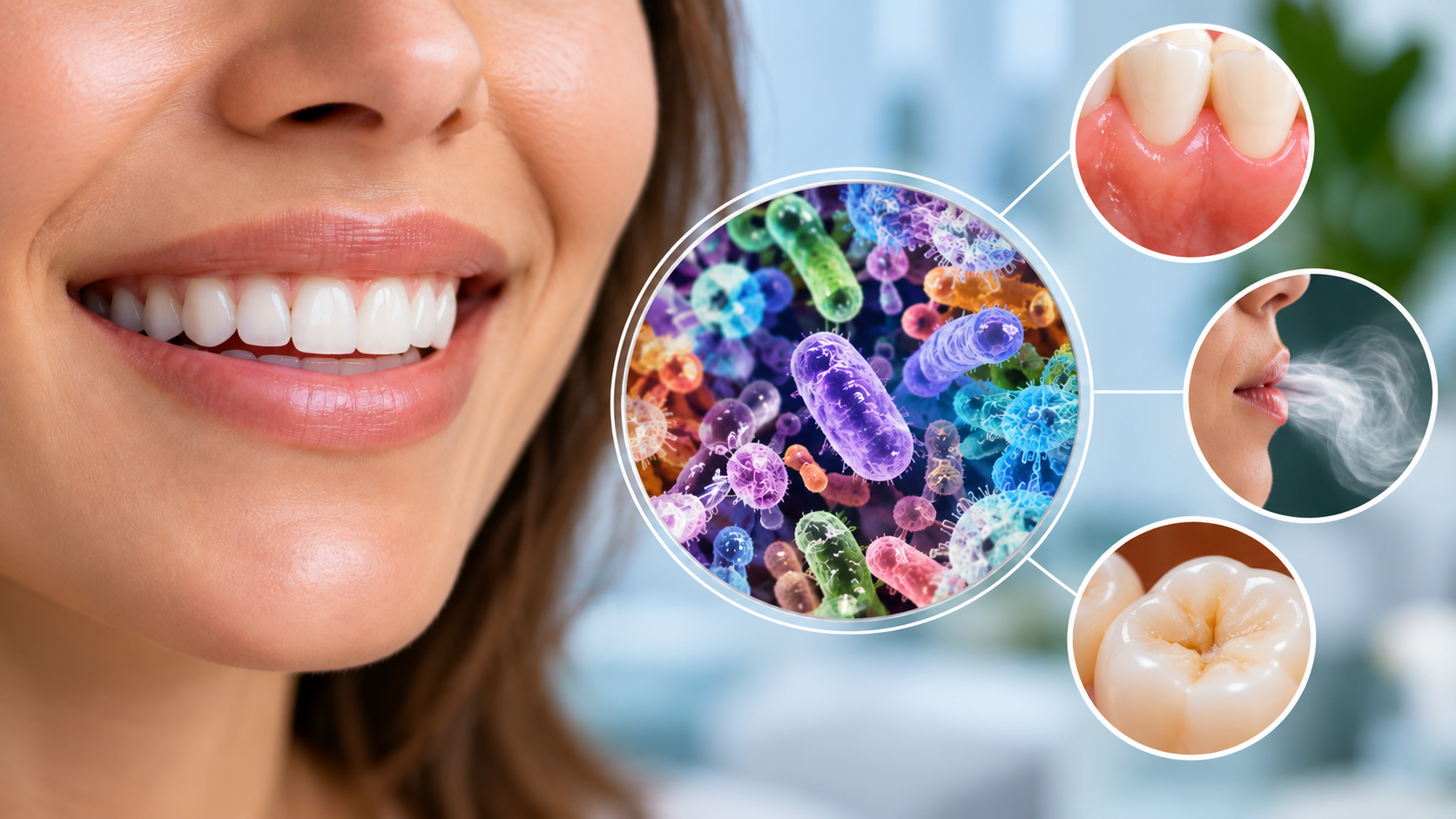
Your mouth is home to a complex community of micro organisms collectively known as the oral microbiome. While many of these microbes are normal, and some form part of a healthy oral ecosystem, changes in their balance can be associated with problems including gum disease, tooth decay and bad breath.
At Optimal Dental Health in London, we offer oral microbiome testing for patients who want to understand their oral health at a deeper level. Rather than simply asking, “Do you have plaque?”, microbiome testing can help us explore a different question:
What is actually living within your oral microbiome, and what might those microbial patterns tell us about your oral environment?
Oral microbiome testing analyses microorganisms in your mouth from a saliva sample. At Optimal Dental Health we use shotgun metagenomic sequencing to identify microbial species and functions that may be associated with gum health, bad breath and tooth decay risk. The results are interpreted alongside your dental examination rather than used as a standalone diagnosis.
We use Salient Bio oral microbiome testing, which analyses a saliva sample using shotgun metagenomic sequencing. The results can provide species-level information and functional analysis, giving us additional data that can be considered alongside your dental examination, gum measurements, X-rays, lifestyle, diet and clinical history. [1]
Importantly, an oral microbiome test does not diagnose gum disease, tooth decay or another medical condition on its own. Instead, we use it as an additional piece of information to help build a more personalised picture of your oral health.
What Is the Oral Microbiome?
The oral microbiome is the community of bacteria and other microorganisms that inhabit areas including your teeth, gums, tongue and saliva.
Having bacteria in your mouth is completely normal. The aim isn’t to create a completely bacteria-free mouth, which would be neither realistic nor desirable. Instead, we are interested in the balance and behaviour of the microbial community.
Problems can arise when environmental pressures favour microbial communities associated with disease, a process often described as dysbiosis.
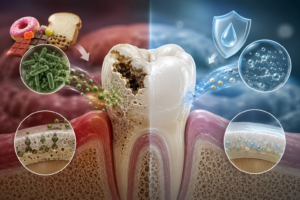
For example, frequent exposure to fermentable carbohydrates can create conditions that favour acid-producing and acid-tolerant microorganisms. Current microbiome research supports the concept of dental caries as a disease involving microbial dysbiosis rather than the action of one single “bad” bacterium. [2]
Similar ecological changes are relevant to periodontal (gum) health. This is one reason we take a whole-mouth approach at Optimal Dental Health. Your microbiome results aren’t considered in isolation: we look at the environment in which those microorganisms are living.
Who Is Salient Bio, the Oral Microbiome Testing Provider?
For our oral microbiome testing, we work with Salient Bio, a London-based diagnostics company specialising in microbiome analysis.
Salient Bio operates a UKAS-accredited laboratory with ISO 17025 workflows and uses high-resolution metagenomic analysis across its microbiome testing services.
Its oral test uses a saliva sample that undergoes shotgun metagenomic sequencing, with Salient’s analysis designed to provide species-level organism reporting, functional microbiome information and a structured overview of the oral ecosystem. [3]
This is more comprehensive than simply looking for one or two predetermined bacterial species.
Salient Bio describes its oral microbiome test as a wellness profile rather than a standalone diagnostic test. This distinction is important: microbiome data can provide valuable additional information, but your results still need to be interpreted alongside what we see clinically in your mouth.
What Can an Oral Microbiome Test Tell Us?
Your report gives us another layer of information about your oral environment.
1. Your Gum Health
One of the most useful areas to investigate is the relationship between your microbial profile and your gums. Your report can highlight microbial patterns associated with gum inflammation and periodontal disease risk.
We then compare this information with clinical signs such as:
- bleeding gums
- gum pocket depths
- plaque accumulation
- gum recession
- bone levels
- previous periodontal disease
- inflammation.
This distinction matters. A microbiome test doesn’t replace a periodontal examination. If, however, we can see clinical inflammation and your microbial profile also contains patterns associated with poorer periodontal health, that information may help us build a more complete picture and personalise your prevention strategy.
2. What Your Microbiome May Tell Us About Bad Breath

Persistent bad breath, or halitosis, can have several causes, but the mouth itself is frequently responsible. Research suggests that approximately 80 to 90% of halitosis originates from intra-oral factors, with tongue coating, periodontal disease and poor oral hygiene among the major contributors. [4]
Certain oral microorganisms can contribute to the production of volatile sulphur compounds (VSCs) associated with oral malodour. Research has also demonstrated a relationship between periodontal disease, the oral microbiome and halitosis. [5]
In fact, a systematic review and meta-analysis found that people with periodontitis had significantly higher odds of halitosis, although the researchers noted that the evidence was derived from observational studies. [6]
Microbiome testing can therefore be particularly interesting when someone says:
“I clean my teeth, but I still don’t understand why my breath doesn’t feel fresh.”
It doesn’t automatically provide one simple cause, but it may give us additional information to investigate alongside your gums, tongue, saliva, hygiene routine and wider health.
3. Your Tooth Decay Risk
Tooth decay is more complicated than simply “eating too much sugar”. Diet matters enormously, but decay develops through an interaction between factors including:
your oral microorganisms + fermentable carbohydrates + saliva + tooth susceptibility + time.
Microbiome research has found differences in both the composition and functional activity of oral microbial communities between people with and without dental caries. [2]
Salient’s report includes information relating to cavity risk and microbial function. [3]
If your results suggest an oral environment more favourable to decay, we can put this information into context.
For example, we may also investigate:
- how frequently you consume sugar or carbohydrates
- acidic drinks
- dry mouth
- saliva quality
- brushing technique
- interdental cleaning
- fluoride or hydroxyapatite use
- existing areas of demineralisation
- previous decay history.
The goal is not to tell you that a particular bacterium means you will develop a cavity. It is to identify modifiable risk factors before they become bigger problems wherever possible.
Why Can This Be Helpful If My Teeth Feel Fine?
Dentistry has traditionally been very good at identifying established disease.
A cavity appears on an X-ray.
A tooth breaks.
A gum pocket gets deeper.
A tooth starts hurting.
At Optimal Dental Health, our preference is to understand why your oral environment may be moving towards disease wherever possible, rather than simply waiting for something to require treatment.
Microbiome testing can add useful information to this preventative approach. Your results may highlight areas worth paying closer attention to even when you are not experiencing obvious symptoms.
Equally, a reassuring microbiome profile doesn’t mean you can skip dental examinations or hygiene appointments. Microbiology is only one part of oral health.
How We Use Your Results at Optimal Dental Health
The most valuable part isn’t simply receiving a report.
It is what we do with the information. We consider your microbiome alongside your clinical findings and individual risk factors. Depending on what we find, your personalised plan could involve changes to home care, interdental cleaning, tongue cleaning, dietary habits or the frequency and type of professional hygiene care.
Our biological dental hygiene appointments can also incorporate live plaque sampling, allowing you to see microorganisms from your own plaque under the microscope.
Where appropriate, we may monitor changes over time rather than treating your microbiome result as a one-off snapshot.
For someone with gum concerns, microbiome information might complement periodontal treatment and ongoing maintenance. For someone experiencing recurrent decay, it could encourage us to investigate diet, saliva and the wider oral environment more closely.
For another patient, the most useful finding may simply be reassurance combined with a clearer understanding of which habits are worth maintaining.
Research also supports the value of established periodontal care: systematic-review evidence has found that professional cleaning and non-surgical periodontal therapy combined with oral-hygiene instruction can improve measures of oral malodour in patients with periodontal conditions. [7]
Microbiome testing therefore doesn’t replace good dentistry, but it can help us personalise it.
What Do Patients Think?
Patients often tell us that seeing objective information about their oral environment makes recommendations easier to understand. One Salient Bio oral microbiome testing customer described their experience as:
“Clear report and easy collection. I took the results to my hygienist and it sparked a really useful conversation about my routine.”
— Sarah M, Salient Bio Oral Health Microbiome Test customer, March 2026 [3]
This reflects what we want patients to gain from microbiome testing: not simply a list of bacterial names, but information that starts a more useful conversation about prevention.
Should You Have an Oral Microbiome Test?
You may find testing particularly useful if you:
- have bleeding or inflamed gums
- have a history of gum disease
- experience persistent bad breath
- develop recurrent tooth decay
- want to understand your oral health in greater detail
- are interested in preventative or biological dentistry
- want a more personalised oral-health plan.
It isn’t essential for every patient, and it shouldn’t replace routine dental examinations, X-rays where clinically indicated or periodontal assessment. The question we ask is whether the additional information is likely to change or improve how we manage your oral health.
Frequently Asked Questions About Oral Microbiome Testing
Is an oral microbiome test painful?
No. Salient Bio’s oral microbiome analysis uses a saliva sample, so there are no needles and the collection itself is straightforward.
Can an oral microbiome test diagnose gum disease?
No. The test can identify microbial patterns associated with periodontal health and provide risk-related information, but gum disease requires a proper clinical assessment. We interpret your microbiome results alongside your gum measurements, bleeding, bone levels and other clinical findings.
Can it tell me why I have bad breath?
It may provide useful clues. Many cases of halitosis originate within the mouth, and microorganisms involved in periodontal disease and volatile sulphur compound production can play a role. However, bad breath has multiple potential causes, so your results need to be considered alongside your oral and medical history.
How much does an oral microbiome test cost?
It is £350 with results in 14 days.
Where can I get an oral microbiome test in London?
Optimal Dental Health offers oral microbiome testing at our practice in Marylebone, central London. The test involves a saliva sample which is sent to a specialist laboratory for metagenomic analysis.
Can microbiome testing tell me if I will get cavities?
It can provide information about microbial patterns and functions associated with cavity risk, but it cannot predict with certainty whether an individual tooth will develop decay. Diet, saliva, fluoride exposure, oral hygiene, tooth structure and many other factors influence your overall risk.
Does the test identify individual bacteria?
Yes. Salient Bio uses shotgun metagenomic sequencing and provides species-level organism reporting as part of its oral microbiome analysis.
Should I repeat my oral microbiome test?
For some patients, repeat testing may be useful to monitor how the oral ecosystem changes following modifications to hygiene, diet or professional care. Whether this is worthwhile depends on your individual circumstances.
Does microbiome testing replace my dental check-up or hygiene appointment?
No. It is an adjunct, not a replacement for clinical dentistry. We get the greatest value from the results when we combine them with what your dentist and hygienist can actually see and measure.
Want to Understand What’s Living in Your Mouth?
Your mouth is an ecosystem and understanding that ecosystem can add another dimension to preventative dental care.
At Optimal Dental Health in Marylebone, London, we combine advanced oral microbiome testing with comprehensive dental assessment and biological dental hygiene to help patients better understand their individual oral environment.
If you are interested in an oral microbiome test in London, speak to our team to find out whether testing would be useful for you.
Call Optimal Dental Health on 0203 921 1000 or contact our team to learn more about oral microbiome testing.
Stay Informed About Your Oral Health
Want to learn more about oral microbiome health, biological dentistry and preventative dental care?
Join the Optimal Dental Health newsletter for expert insights from our London dental team, including practical advice on gum health, tooth decay prevention, oral microbiome testing, nutrition, sleep, whole-body health and the latest developments in holistic and biological dentistry.
We also share new articles, practice updates, upcoming events and selected offers from our team in Marylebone, London. Sign up to the Optimal Dental Health newsletter and discover more ways to understand, protect and optimise your oral health.
About the Author: Dr James Goolnik
Dr James Goolnik is a dentist, functional nutritionist and Clinical Director of Optimal Dental Health in London, with a particular interest in prevention, biological dentistry and the relationship between oral and systemic health. .
At Optimal Dental Health, Dr Goolnik and the multidisciplinary team combine established clinical dentistry with technologies and assessments designed to provide a more detailed understanding of each patient’s oral health. This includes periodontal assessment, biological dental hygiene, live plaque microscopy and oral microbiome testing.
Article reviewed: September 2026
Clinical reviewer: Dr James Goolnik
Location: Optimal Dental Health, Marylebone, London
References
[1] Salient Bio. Oral Microbiome – Professional Microbiome Analysis. Salient Bio.
https://salient.bio/products/microbiome/oral
[2] Oral microbiota: Taxonomic composition and functional profile in caries-free and in caries-affected individuals – A systematic review. Archives of Oral Biology. 2024;168:106070.
https://doi.org/10.1016/j.archoralbio.2024.106070
[3] Salient Bio. Clinical-grade microbiome analysis / Oral Health Microbiome Test.
https://store.salient.bio/
[4] Memon MA, et al. Aetiology and associations of halitosis: A systematic review. Oral Diseases. 2023;29(4):1432–1438.
https://pubmed.ncbi.nlm.nih.gov/35212093/
[5] Hong JY, et al. Oral microbiome as a co-mediator of halitosis and periodontitis: a narrative review. Frontiers in Oral Health. 2023.
https://pmc.ncbi.nlm.nih.gov/articles/PMC10500072/
[6] Silva MF, et al. Is periodontitis associated with halitosis? A systematic review and meta-regression analysis. Journal of Clinical Periodontology. 2017;44(10):1003–1009.
https://pubmed.ncbi.nlm.nih.gov/28749582/
[7] Deutscher HCD, et al. The effect of professional tooth cleaning or non-surgical periodontal therapy on oral halitosis in patients with periodontal diseases: A systematic review. International Journal of Dental Hygiene. 2018;16:36–47.
https://pubmed.ncbi.nlm.nih.gov/28836329/