How to Remove Tartar From Teeth: The Right Way
If you’ve been searching for how to remove tartar from teeth, you’re certainly not alone. Tartar, also known as dental calculus, is one of the most common reasons people visit a dental hygienist. It can leave your teeth feeling rough, contribute to bad breath, stain easily and increase your risk of gum disease. [3]
The good news is that tartar can be removed safely. The important thing to know is that once plaque has hardened into tartar, it cannot usually be removed by brushing alone.
At Optimal Dental Health, our dental hygienists in Marylebone, London, just a short walk from Baker Street Station, take a prevention-first approach. Rather than simply removing tartar, we help you understand why it forms, how to reduce it in the future and how maintaining healthy gums supports your overall health.
Can You Remove Tartar From Teeth at Home?
The short answer
No. Once plaque hardens into tartar, it normally requires professional removal by a dentist or dental hygienist.
You can successfully remove soft dental plaque every day with good brushing and cleaning between the teeth. However, once minerals in your saliva harden that plaque into calculus, it becomes firmly attached to the tooth surface.
Trying to scrape it away yourself using dental tools bought online can damage the enamel, injure your gums or even introduce infection.
If you can feel rough deposits around your gumline or notice yellow or brown build-up that won’t brush away, it’s time to book a professional hygiene appointment.
Understanding Dental Tartar and How It Forms
Tartar is simply hardened dental plaque.
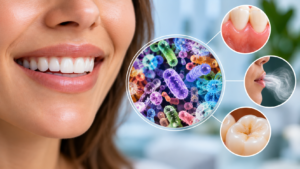
Plaque is a sticky biofilm made up of bacteria, saliva and food debris that naturally develops on your teeth throughout the day. If it isn’t removed thoroughly, minerals naturally found in saliva gradually harden it into tartar.
Unlike plaque, tartar has a rough surface that attracts even more bacteria, allowing plaque to accumulate faster.
Tartar commonly develops:
- behind the lower front teeth
- around the gumline
- between the teeth
- around crowded or overlapping teeth
- around braces and fixed retainers
- around crowns, bridges and old fillings
The longer tartar remains, the more difficult it becomes to clean the surrounding areas effectively.
Why Does Tartar Matter?
Many people assume tartar is purely a cosmetic problem because it often appears yellow or brown. In reality, it has much bigger implications.
Tartar provides an ideal surface for bacteria to grow, increasing the risk of:
- bleeding gums
- swollen or tender gums
- persistent bad breath
- gingivitis
- periodontal (gum) disease
- gum recession
- eventual tooth loss if gum disease progresses
According to the NHS, plaque that is not effectively removed irritates the gums and can eventually contribute to gum disease if left untreated. [1]
Healthy gums are also increasingly recognised as being important for whole-body health. Research continues to explore links between periodontal disease and conditions including diabetes and cardiovascular disease, making prevention even more worthwhile.
Signs You May Need Professional Tartar Removal
Many people don’t realise tartar is present until their hygienist points it out. You may benefit from a biological dental hygiene appointment if you notice:
- yellow, cream or brown deposits around your teeth
- rough areas you can feel with your tongue
- bleeding when brushing
- persistent bad breath
- inflamed or swollen gums
- staining that doesn’t brush away
- you’ve not had a hygiene appointment for six months or longer
- you wear orthodontic retainers
- you have crowded teeth
- you smoke, vape or use tobacco products
Even patients with excellent brushing habits can develop tartar, as everyone’s saliva chemistry is different.
Can Tartar be Removed From Teeth?
Yes, but only by a dental professional once it has hardened. Brushing removes soft plaque, but hardened tartar (calculus) must be removed using professional scaling instruments. Trying to remove tartar yourself can damage your teeth and gums.
Can Brushing Remove Hardened Tartar?
Unfortunately not. Brushing removes soft plaque, but once tartar forms it becomes firmly bonded to the tooth surface. Using a harder toothbrush or brushing more aggressively won’t remove it.
Instead, aggressive brushing can contribute to:
- enamel wear
- tooth sensitivity
- gum recession
- damaged toothbrush bristles
- ineffective cleaning
The goal at home isn’t to remove existing tartar, it’s to stop new plaque turning into more tartar.
The Best Ways to Prevent Tartar Build-Up
Preventing tartar is much easier than removing it. Our hygienists recommend:
Brush Twice Daily
Use a hydroxyapatite toothpaste and brush for at least two minutes, paying particular attention to the gumline where plaque accumulates. An electric toothbrush with a pressure sensor often provides more consistent plaque removal than manual brushing.
Clean Between Your Teeth Every Day
Toothbrush bristles simply cannot reach between teeth. Daily flossing or interdental brushes remove plaque before it hardens. Many adults benefit from interdental brushes, although the correct size should be recommended by your hygienist.
Don’t Rush
Many people brush for less than one minute. Taking your time dramatically improves plaque removal.
Keep Regular Hygiene Appointments
Some people naturally produce tartar more quickly than others. Your hygienist may recommend visits every three, four or six months depending on your individual risk.
This is one of the most searched questions online. ‘Does baking soda remove tartar build-up?’
Baking soda (sodium bicarbonate) is found in some toothpastes because it can help remove surface stains and neutralise acids. However, it does not dissolve hardened tartar.
DIY baking soda scrubs are often far more abrasive than professionally formulated toothpastes and may contribute to unnecessary enamel wear if overused.[4]
Does Hydrogen Peroxide Remove Tartar?
Another common online claim is that rinsing with 3% hydrogen peroxide or mixing it with baking soda removes tartar. Current evidence does not support this as a reliable method for removing hardened calculus.
Hydrogen peroxide may have some antibacterial effects and is sometimes used professionally in controlled concentrations, but it will not safely detach tartar that’s firmly attached to teeth. Repeated home use can also irritate soft tissues if used incorrectly.
For these reasons, we don’t recommend hydrogen peroxide as a DIY tartar removal solution. [5]
Does ProDen PlaqueOff Help?
ProDen PlaqueOff is a natural seaweed supplement made from Ascophyllum nodosum.
Some clinical studies suggest it may reduce plaque accumulation and slow future calculus formation when used alongside normal oral hygiene. [6]
However, it’s important to understand what it doesn’t do. It cannot remove tartar that is already present. Think of it as a possible supportive measure rather than a replacement for:
- brushing
- interdental cleaning
- professional hygiene appointments
Patients with thyroid conditions or iodine sensitivity should always discuss supplementation with their healthcare professional before starting.
Does Fragaria Vesca Remove Tartar?
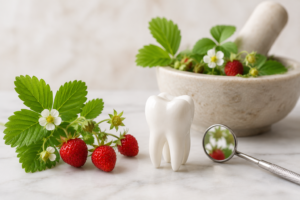
Fragaria vesca (wild strawberry) is sometimes mentioned within homeopathic circles as a remedy for tartar build-up.
At present, there is insufficient high-quality scientific evidence demonstrating that it safely removes dental calculus. Professional scaling remains the recognised standard of care.
How We Remove Tartar at Optimal Dental Health

Our hygiene appointments focus on much more than simply cleaning teeth. Every appointment is tailored to your individual needs.
1. Comprehensive Gum Assessment
We assess:
- gum health
- bleeding scores
- plaque levels
- areas of calculus accumulation
- periodontal measurements where appropriate
- our overall oral microbiome health
- Bacterial load using our phase-contrast microscope
2. Professional Calculus Removal
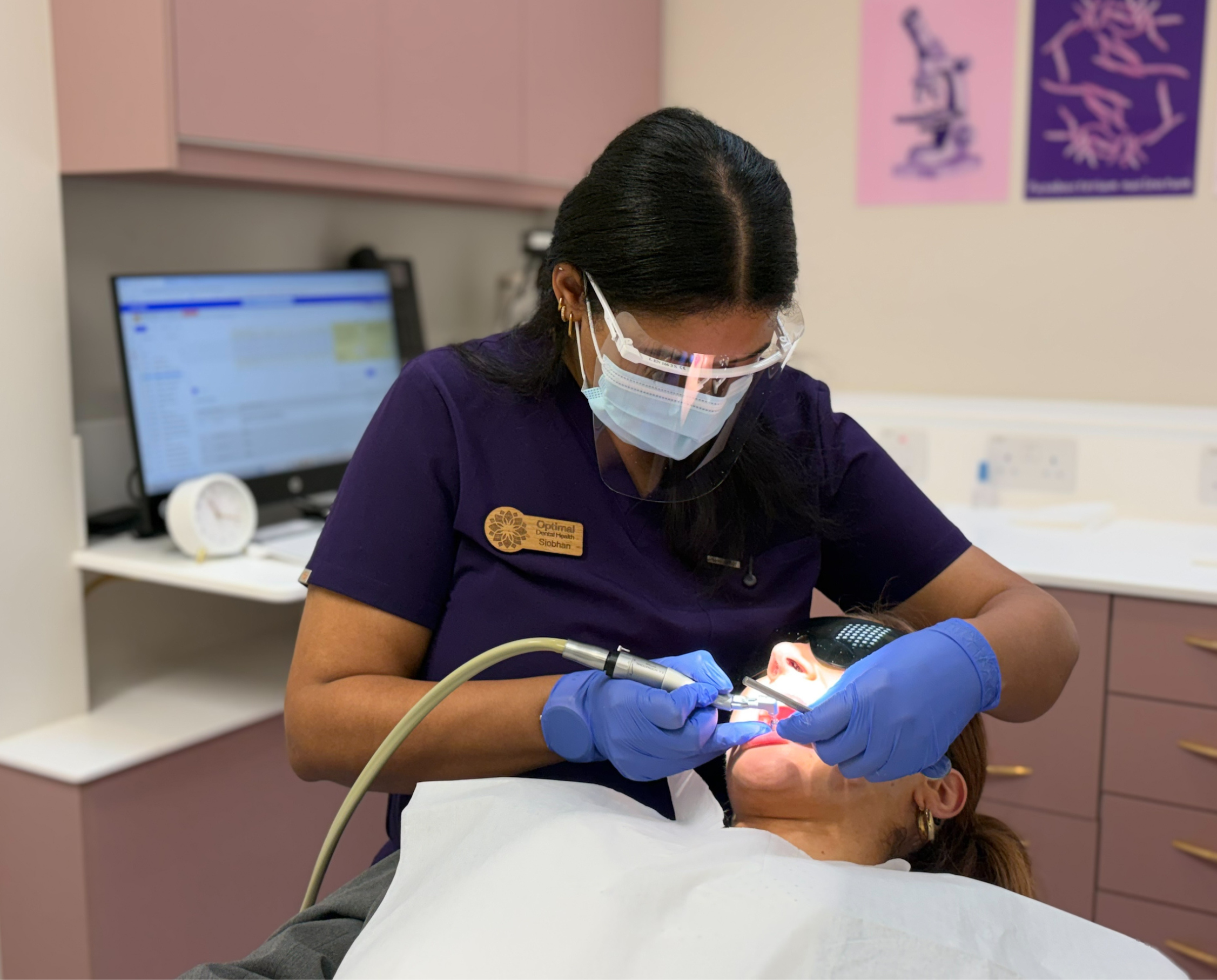
Your hygienist carefully removes hardened tartar using professional ultrasonic instruments and fine hand scalers. These instruments are specifically designed to remove deposits while preserving healthy tooth structure.
3. Airflow® Cleaning
Where appropriate, we may use Airflow® technology to gently remove surface staining and biofilm using warm water, air and fine powder. This leaves teeth feeling exceptionally smooth while being comfortable for many patients.
4. Personalised Oral Hygiene Coaching
One of the most valuable parts of your visit is learning exactly where plaque is accumulating. Small changes to your brushing technique can make a significant difference.
5. Prevention Planning
Some patients naturally build tartar quickly. Rather than recommending the same recall interval for everyone, we tailor your hygiene schedule based on your risk factors and oral health.
Our Holistic Approach to Dental Hygiene

Tartar doesn’t simply trap bacteria, it changes the environment around the gums, allowing disease-causing bacterial communities (dysbiosis) to thrive. At Optimal Dental Health, we focus on reducing harmful biofilm while supporting a healthier oral microbiome.
Alongside professional tartar removal London, we may discuss:
- diet and sugar frequency
- dry mouth
- oral microbiome balance
- stress
- mouth breathing and jaw function
- smoking or vaping
- medical conditions
- medications affecting saliva production
Healthy saliva is one of your body’s greatest natural defenses against plaque accumulation. Supporting saliva production and oral health naturally can play an important role in long-term prevention.
Frequently Asked Questions
Can I scrape tartar off myself?
No. DIY dental scaling can damage enamel and gums. Professional instruments are designed to remove tartar safely.
Is tartar the same as plaque?
No. Plaque is soft bacterial biofilm. Tartar is plaque that has hardened with minerals from saliva.
Does mouthwash remove tartar?
No. Mouthwash may help reduce bacteria but cannot dissolve hardened tartar.
Is tartar removal painful?
Most patients find hygiene treatment very comfortable. If you have sensitive teeth, we can adapt your treatment to make it as comfortable as possible.
How often should I have my teeth professionally cleaned?
This varies. Some patients benefit from appointments every three months, while others only require visits every six months.
Can tartar cause bad breath?
Yes. The bacteria trapped within tartar can contribute significantly to persistent bad breath.
Does Airflow remove tartar?
Airflow is excellent for removing biofilm and surface staining. Hardened tartar still requires professional scaling before or alongside Airflow treatment.
Why do I keep getting tartar even though I brush well?
Saliva composition, crowded teeth, retainers, genetics, diet and brushing technique all influence how quickly tartar develops.
Remove Tartar Before It Becomes Gum Disease
Tartar isn’t simply a cosmetic concern. Left untreated, it creates an ideal environment for bacteria that can irritate your gums and contribute to periodontal disease.
Fortunately, regular professional hygiene appointments combined with good daily cleaning can keep your mouth healthy and significantly reduce future build-up. If you’ve noticed rough deposits, bleeding gums or staining that won’t brush away, don’t wait for it to become a bigger problem.
Our experienced dental hygienists provide gentle, personalised tartar removal in London, helping you achieve healthier gums, fresher breath and a cleaner smile while supporting your long-term oral health.
Book a Professional Biological Hygiene Appointment in London
If you’re looking to remove tartar from your teeth safely, we’d be happy to help.
Optimal Dental Health
1 Melcombe Street
Marylebone
London NW1 6AE
Just minutes from Baker Street Station
☎ 020 3921 1000
✉ hello@optimaldental.co.uk
Book your hygiene appointment today and let our team help you protect your smile with evidence-based, prevention-focused dental care.
About the Author: Dr James Goolnik BDS MSc
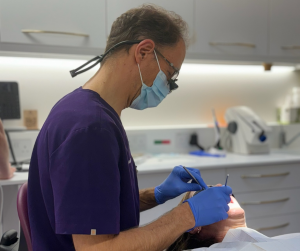
Dr James Goolnik is one of the UK’s leading biological and holistic dentists, with more than 30 years of clinical experience helping patients improve both their oral and overall health.
As Founder and Clinical Director of Optimal Dental Health in Baker Street, London, Dr Goolnik has developed a practice that looks beyond teeth alone, recognising the important links between oral health, the oral microbiome, nutrition, breathing, sleep and whole-body wellbeing.
He is an internationally recognised lecturer on biological dentistry and oral-systemic health, regularly speaking to healthcare professionals about the connections between gum disease, inflammation, chronic disease and preventative healthcare. His clinical interests include safe SMART amalgam removal, periodontal health, airway-focused dentistry, ceramic implants, oral microbiome testing and minimally invasive restorative dentistry.
Dr Goolnik is passionate about helping patients make informed decisions through evidence-based, prevention-focused care that supports long-term health rather than simply treating symptoms.
Learn more about Dr James Goolnik or book a consultation at Optimal Dental Health, London.
Join Over 4,000 Health-Conscious Subscribers

Looking to stay up to date with the latest research on oral health, longevity and holistic dentistry?
Join more than 3,500 subscribers who receive our regular newsletter packed with evidence-based advice, expert oral health tips and the latest developments in biological dentistry.
You’ll receive:
- Practical tips to improve your oral and overall health
- The latest research on the oral microbiome and whole-body wellbeing
- Advice from Dr James Goolnik and our multidisciplinary team
- Early access to educational webinars, events and new blog articles
- Product recommendations and preventative health insights
Join our free monthly newsletter today and become part of a growing community taking a proactive approach to lifelong health.