Mercury Fillings (Dental Amalgam): Side Effects, Risks & Removal
For decades, dental amalgam fillings (also known as silver fillings), were considered the gold standard for restoring teeth. Strong, durable and relatively inexpensive, millions of people across the UK still have them today.
However, one aspect of amalgam has remained controversial for years. Around 50% of a traditional silver filling is elemental mercury by weight. This has led researchers, dentists and health organisations to investigate whether mercury released from these restorations could affect human health.
Some clinicians believe mercury exposure from fillings is clinically insignificant for most people. Others argue that even low-level, long-term exposure may contribute to health concerns in susceptible individuals.
At Optimal Dental Health we believe patients deserve access to balanced, evidence-based information so they can make informed decisions about their health. We have never placed Amalgam fillings at this practice and are very careful to document and review our patients exisiting amalgam fillings.
What Are Mercury Fillings?
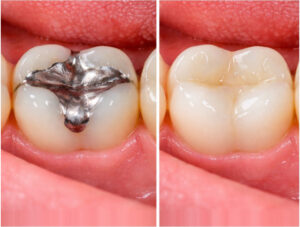
Although commonly called silver fillings, dental amalgam restorations contain several metals. Typical composition includes:
- Mercury
- Silver
- Tin
- Copper
- Trace amounts of Zinc
Mercury acts like a liquid binder, allowing the alloy to harden into an extremely durable restoration. Dental amalgam was used in UK dentistry for more than 180 years because of its durability and cost-effectiveness. Since 1 July 2026, it can no longer be routinely placed in the UK, except in limited circumstances where there is a specific medical need. Millions of people still have existing amalgam fillings, which is why patients continue to ask about their safety and whether they should be replaced.
Dental amalgam has been shown to release small amounts of mercury vapour, particularly during chewing and teeth grinding.
This release is well documented in scientific literature and acknowledged by health authorities. [1]
Does Mercury Escape From Fillings?
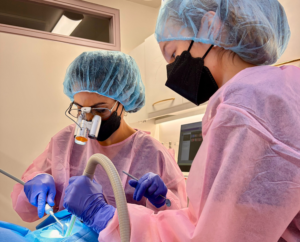
Yes. The World Health Organization, FDA and numerous peer-reviewed studies confirm that mercury vapour is released from amalgam restorations throughout their lifetime. [2]
Once inhaled, mercury vapour can enter the bloodstream before being distributed around the body. The real scientific debate is not whether mercury is released, it is whether the amount released is enough to affect health in different individuals. This distinction is important.
Potential Side Effects of Mercury Fillings
Scientific evidence is complex. Many people with amalgam fillings experience no symptoms. However, research continues to investigate whether long-term exposure may influence health in susceptible individuals.
Possible concerns discussed in the literature include:
Neurological Symptoms
Mercury is recognised as a neurotoxin at sufficiently high levels. Researchers have explored whether chronic low-level exposure could contribute to symptoms including:
- Brain fog
- Memory difficulties
- Poor concentration
- Headaches
- Fatigue
Current evidence has not established that dental amalgam causes these symptoms in the general population, but ongoing research continues to examine possible associations.[3]
Chronic Fatigue
Some patients report improvements in symptoms following amalgam removal, although current research has not demonstrated consistent benefits across all patients. However, systematic reviews have found insufficient evidence to conclude that amalgam removal consistently improves chronic fatigue. [4]
This highlights the importance of personalised healthcare rather than assuming mercury is always the underlying cause.
Autoimmune Conditions
Researchers have investigated whether mercury exposure could influence immune regulation. Laboratory studies demonstrate mercury can affect immune function.
Whether the amounts released from dental fillings contribute to autoimmune disease remains uncertain.
Individuals with autoimmune conditions often choose to discuss amalgam removal with biological dentists as part of a broader health strategy.
Kidney Function
The kidneys play an important role in eliminating mercury from the body. Several studies have examined whether dental amalgam affects kidney health.
Current evidence suggests healthy adults are unlikely to experience clinically significant kidney damage from amalgam fillings. [5] However, individuals with existing kidney disease may require additional consideration.
Allergic Reactions
Although uncommon, mercury allergy does occur. Some patients develop:
- Oral burning
- White lesions
- Lichenoid reactions
- Chronic irritation around amalgam restorations
Replacing these fillings often resolves symptoms. [6]
Pregnancy
Many organisations advise avoid amalgam placement or removal during pregnancy. This recommendation is precautionary rather than evidence that dental fillings cause harm.
The UK has adopted restrictions limiting amalgam use in:
- Pregnant women
- Breastfeeding mothers
- Children under 15 where appropriate [7]
These restrictions were introduced primarily to reduce environmental mercury use.
Why Is Mercury So Controversial?
Mercury is recognised globally as a toxic heavy metal. In other contexts, governments tightly regulate mercury exposure. This naturally leads people to ask:
“If mercury is toxic, why is it still used in fillings?”
Health organisations conclude that existing amalgam fillings generally do not require removal solely to prevent disease in healthy individuals.
At the same time, many countries are actively reducing amalgam use for environmental and public health reasons. The European Union has introduced significant restrictions, and the Minamata Convention aims to phase down mercury use worldwide. [8]
So while mercury fillings remain legal in many countries, dentistry is steadily moving towards mercury-free alternatives.
Who May Consider Mercury Filling Removal?
Reasons people choose a mercury dentist London include:
- Cracked or failing fillings
- Cosmetic concerns
- Preparing for biological or holistic healthcare
- Metal sensitivities
- Personal preference
- Planning pregnancy
- Reducing overall mercury exposure
At our biological dental practice in London, we always begin with a comprehensive assessment. We never recommend removing stable amalgam fillings unnecessarily. Instead, we discuss the benefits, risks and available options based on your individual circumstances.
Why Removing Mercury Fillings Requires Special Care
Ironically, the greatest mercury exposure often occurs during removal. Drilling amalgam fillings generates:
- Mercury vapour and mercury toxicity
- Fine particulate matter
- Aerosols
Without appropriate safety measures, both yourself and the dental team may inhale increased amounts of mercury during treatment. This is why proper protocols matter. If you’re looking into replacing silver fillings, keep reading.
SMART Amalgam Removal in London
At Optimal Dental Health, we provide SMART (Safe Mercury Amalgam Removal Technique) procedures developed by the International Academy of Oral Medicine and Toxicology (IAOMT).
SMART is designed to significantly reduce mercury exposure during removal. The protocol for amalgam removal includes:
Rubber Dam Isolation
The tooth is isolated to minimise ingestion of amalgam particles.
High-Volume Evacuation
Specialised suction captures mercury vapour and debris immediately.
Continuous Water Cooling
This reduces heat generation and mercury vapour release.
Sectioning the Filling
Rather than grinding the filling away, we remove it in larger pieces wherever possible.
Protective Barriers
You will be provided with protective coverings and additional safeguards throughout treatment.
Air Filtration
Advanced filtration systems help reduce airborne particles within the surgery.
Oxygen Support
Where clinically appropriate, supplemental oxygen can help reduce inhalation of mercury vapour during the procedure.
Biocompatible Replacement Materials
Once removed, fillings are replaced with modern mercury-free, biocompatible restorative materials selected for durability, aesthetics and function.
Our dentists have completed IAOMT SMART training and follow internationally recognised protocols for safe amalgam removal.
If you are searching for SMART amalgam removal in London, biological dentistry near Baker Street, or a holistic dentist offering mercury filling removal, our team can help.
What Happens Before SMART Removal?
Safe removal begins long before the appointment itself. Your consultation may include:
- Full dental examination
- Digital X-rays where appropriate
- Assessment of existing restorations
- Discussion of your medical history
- Nutritional considerations
- Personalised treatment planning
In some cases, you may also choose to work alongside our Holistic Health & Longevity Doctor, before undergoing amalgam removal.
Should Everyone Remove Mercury Fillings?
No. A balanced approach is important. Current evidence does not support removing every amalgam filling in every person. However, removal may be appropriate when:
- Fillings are cracked
- Decay is present
- Replacement is already needed
- Metal sensitivities are suspected
- A biological treatment philosophy aligns with personal health goals
The decision should always be individualised after discussing the benefits and risks with one of our holistic health professionals in London.
Can dentists still place mercury fillings in the UK?
Since 1 July 2026, dental amalgam is no longer routinely used in the UK. Existing fillings remain in place unless there is a clinical reason to replace them, and limited exceptions may apply where there is a specific medical need.
Who should NOT have amalgam removed?
Removal may not be appropriate if:
- the filling is functioning well
- unnecessary drilling would remove healthy tooth tissue
- pregnancy (unless urgent)
- medical conditions requiring stabilisation first
Why Choose a Biological Dentist in London?
Biological dentistry considers how oral health may interact with the rest of the body. Rather than simply treating teeth in isolation, biological dentists often consider:
- Oral microbiome health
- Nutrition
- Inflammation
- Airway health
- Biocompatible materials
- Minimally invasive dentistry
- Prevention
At Optimal Dental Health, our aim is to preserve healthy tooth structure while helping you make informed decisions about their long-term oral and overall wellbeing.
Book Your SMART Amalgam Removal Consultation
If you’re concerned about the potential side effects of mercury fillings, or you’d simply like expert advice on whether replacement is appropriate, we’re here to help.
At Optimal Dental Health, our experienced biological dentists provide comprehensive assessments and SMART-certified amalgam removal in London using internationally recognised safety protocols.
Located just moments from Baker Street Station, we welcome everyone from across London and the UK seeking holistic, mercury-free dentistry.
Whether you have one silver filling or several, we’ll discuss your options carefully, answer your questions honestly, and create a personalised treatment plan tailored to your needs.
Book your consultation today to learn more about safe mercury filling removal and modern biocompatible alternatives.
Call: 020 3921 1000
Email: hello@optimaldental.co.uk
Download Your FREE Guide to Safe Amalgam Removal in London
Want to find out more? Download your FREE guide.
Frequently Asked Questions About Mercury Fillings
Are mercury fillings dangerous?
Mercury fillings release small amounts of mercury vapour. They are considered safe for most people, but concerns remain about long-term exposure in sensitive individuals.
What symptoms have been linked to mercury fillings?
Reported symptoms include fatigue, headaches, brain fog, metallic taste and mouth irritation. However, research has not confirmed that amalgam causes these symptoms in most people.
Should I have my mercury fillings removed?
Not always. Removal may be considered if a filling is damaged, decayed, causing irritation or if you prefer a mercury-free approach.
Is removing mercury fillings safe?
Yes, when appropriate safety measures are used. Protective protocols help reduce exposure to mercury vapour and particles during removal.
What is SMART amalgam removal?
SMART stands for Safe Mercury Amalgam Removal Technique. It uses measures such as rubber dam isolation, high-volume suction, water cooling and protective barriers.
Can mercury fillings affect overall health?
Research has not established a clear link between amalgam fillings and chronic illness in most people. Individual sensitivity and exposure levels may vary.
What can replace a mercury filling?
Common alternatives include tooth-coloured composite fillings, ceramic inlays, onlays and crowns.
Where can I find SMART amalgam removal in London?
Optimal Dental Health offers SMART amalgam removal near Baker Street, London, following recognised safety protocols and personalised treatment planning.
About the Author: Dr James Goolnik

Dr James Goolnik is the Clinical Director of Optimal Dental Health, a leading biological and holistic dental practice in Baker Street, London.
With over 30 years of clinical experience, Dr James Goolnik has developed an international reputation for integrating modern evidence-based dentistry with a whole-body approach to health. He has completed advanced training in biological dentistry, oral-systemic health, oral microbiome assessment, airway-focused dentistry, minimally invasive restorative techniques and IAOMT SMART amalgam removal.
His clinical philosophy centres on prevention, patient education and preserving natural teeth wherever possible.
Through Optimal Dental Health, Dr Goolnik and his multidisciplinary team provide comprehensive dental care that combines advanced technology with personalised treatment planning, helping you achieve healthier smiles while supporting long-term wellness.
Join 4,000+ Subscribers:
Want to stay up to date with the latest research in biological dentistry, oral microbiome science, longevity, prevention and holistic health?
Join thousands of readers who receive practical oral health advice, evidence-based articles and updates from the team at Optimal Dental Health.
Our newsletter includes:
- The latest oral health research
- Tips for improving your oral microbiome
- Preventative dental advice
- Nutrition and lifestyle guidance
- Patient guides and educational resources
- Invitations to webinars and events
Sign up today and become part of a growing community focused on lifelong oral and whole-body health.

Article References
[1] World Health Organization. Mercury and Health. https://www.who.int/news-room/fact-sheets/detail/mercury-and-health
[2] FDA. Dental Amalgam Fillings. https://www.fda.gov/medical-devices/dental-devices/dental-amalgam-fillings
[3] National Research Council. Toxicological Effects of Methylmercury. https://nap.nationalacademies.org/catalog/9899/toxicological-effects-of-methylmercury
[4] Cochrane Oral Health. Reviews on dental amalgam restorations and health outcomes. https://www.cochranelibrary.com
[5] European Commission Scientific Committee on Emerging and Newly Identified Health Risks (SCENIHR). The Safety of Dental Amalgam and Alternative Materials. https://ec.europa.eu/health
[6] IAOMT Scientific Review. Amalgam and Oral Lichenoid Reactions. https://iaomt.org
[7] UK Government. Restrictions on the use of dental amalgam. https://www.gov.uk
[8] Minamata Convention on Mercury. United Nations Environment Programme. https://www.mercuryconvention.org