What Is Functional Dentistry? Why Your Mouth Matters More Than You Think
By Dr James Goolnik BDS MSc | Clinical Director, Optimal Dental Health, Baker Street, London
We dentists are very good at fixing teeth. We repair cavities, treat gum disease and replace missing teeth. But how often do we stop to ask why those problems developed in the first place?
That was the question I put to a room full of dentists recently. After more than 30 years in clinical practice, I believe one of the most exciting opportunities in dentistry is not simply doing better fillings. It is helping people understand the signals their mouths may be giving them, identifying preventable risks and working with other healthcare professionals when needed.
This is what functional dentistry means to me. It is not an alternative to good dentistry. It is good dentistry with better questions.
At Optimal Dental Health in Baker Street, London, we aim to protect your natural teeth while considering the wider factors that influence oral health: diet, saliva, the oral microbiome, sleep, stress, medication and medical history. The best dental treatment, wherever possible, is the treatment you never need.
What is functional dentistry?
Functional dentistry is a prevention-led, whole-person approach to dental care. We still diagnose and treat cavities, gum disease, infections and damaged teeth. But we also look for the reasons problems may keep coming back.
For example:
- Why does someone develop repeated decay despite brushing regularly?
- Why do gums continue to bleed when plaque control seems good?
- Could a persistently dry mouth be connected to medication or mouth breathing?
- Is a patient grinding their teeth while also sleeping badly?
- Could diet, an underlying health condition or another risk factor be contributing?
You may hear related terms such as holistic dentistry, biological dentistry and root-cause dentistry. They overlap, but they are not interchangeable or formally recognised dental specialties. What matters is that the care is appropriate, evidence-informed and tailored to the person in the chair.
Your mouth is part of your body, not separate from it
Your mouth is home to blood vessels, nerves, immune cells, saliva and a remarkable community of microorganisms. Oral conditions can affect eating, speaking, sleep, comfort and quality of life. Medical conditions and medication can also change what happens inside your mouth.
Research has found associations between periodontal (gum) disease and several wider health conditions, including diabetes and cardiovascular disease. Some connections are better established than others. Importantly, an association does not prove that one disease causes another. Dental treatment should never be represented as a cure for a medical condition.
The relationship between gum disease and type 2 diabetes is particularly well studied. Poorly controlled diabetes can increase the risk and severity of periodontal disease. Periodontal inflammation, in turn, can make blood glucose management more challenging. In some people with diabetes, treating periodontitis can lead to modest improvements in HbA1c alongside appropriate medical care. [1,2]
That is why I believe dentists should be comfortable working with GPs and other clinicians, rather than viewing oral health in isolation.
Bleeding gums: common, but not healthy
One of the simplest questions we ask is: “Do your gums bleed when you brush or clean between your teeth?”
Bleeding gums are common, but they should not be ignored. Often the cause is gingivitis or periodontitis, although there are other possible explanations. We examine the gums, measure relevant periodontal findings, review plaque control and assess risk factors before recommending care. [3]
Occasionally, a patient has ongoing inflammation that seems disproportionate to the plaque we can see. That is when we need to investigate rather than repeat the same advice indefinitely. We may review medical history, medication and symptoms, and recommend assessment by another healthcare professional where indicated.
Our aim is not just to stop bleeding today. It is to understand what is happening and help keep gums healthy over time.
Your oral microbiome: not all bacteria are bad
Your mouth contains an ecosystem of bacteria, fungi and other microorganisms, collectively called the oral microbiome. Many of these organisms are a normal part of a healthy mouth.
Problems can arise when the balance of the microbial community, its environment and the body’s response shift towards disease—a process often described as dysbiosis. Diet, plaque accumulation, saliva, smoking and other factors can influence this balance.
At Optimal Dental Health, our hygienists may use phase-contrast microscopy to show patients microorganisms from a sample of their own plaque. When someone sees that movement on a screen, oral hygiene can suddenly feel much more real and relevant.
It is an educational and motivational tool, not a standalone test for diagnosing gum disease or identifying every organism present. Clinical examinations and established periodontal assessments remain essential.
Does everyone need an oral microbiome test?
No. Laboratory saliva or plaque testing may be useful in selected situations, but it is not necessary for every patient, and its clinical value varies depending on the question being asked.
Before recommending any additional test, I ask two things:
- Will it change how we manage this patient’s care?
- Will it help the patient understand the problem or make meaningful changes?
If the answer to both is no, we should question whether the test is worth the cost. I would rather start with a thorough examination and the basics than order sophisticated tests that do not improve care.
Nutrition: looking beyond “eat less sugar”
Sugar matters in tooth decay, but so does how frequently we expose our teeth to fermentable carbohydrates and acidic drinks. Frequent snacking and sipping can repeatedly lower plaque pH, increasing the time teeth spend in conditions that favour mineral loss.
So instead of simply telling a patient to brush harder, we discuss their routines. Are they grazing throughout the day? Sipping sweetened or acidic drinks? Struggling with dry mouth? Has something changed in their diet or lifestyle?
I am a strong believer in a food-first approach. Appropriate nutrition supports general health, but there is no universal supplement programme that prevents dental disease. If a nutritional deficiency is suspected, we consider the clinical context and whether investigation or referral is appropriate, rather than recommending blood tests or supplements automatically.
Vitamin D, for example, plays a role in bone health and normal immune function. Its relationship with periodontal health and healing is being studied, but supplementation has not been shown to improve dental outcomes for everyone.
Teeth grinding: sometimes we need to ask about sleep
If you grind or clench your teeth, a protective splint can be valuable in preventing further tooth wear. But a splint alone does not necessarily explain why you are clenching.
Awake clenching may be associated with stress and habits. Sleep bruxism has a more complex range of contributing factors and should not be assumed to have one cause.
When appropriate, I ask patients a simple question: “Do you wake up feeling refreshed?”
If someone snores heavily, wakes with headaches, feels exhausted during the day or has witnessed pauses in breathing, we may discuss investigation for a sleep-related breathing disorder.
A dentist can recognise possible warning signs, but obstructive sleep apnoea cannot be diagnosed by looking in the mouth. Diagnosis needs an appropriate sleep assessment. For selected patients with confirmed obstructive sleep apnoea, a custom mandibular advancement device may be part of a clinician-led treatment plan. [4]
What can your tongue tell us?
The tongue deserves attention during every oral examination. We look for changes in colour, coating, texture, movement, ulcers, unusual patches and other signs that may need assessment.
Some findings are harmless. Others can be associated with local irritation, infection, nutritional problems or underlying health conditions. No single tongue appearance provides a reliable diagnosis of diabetes, anaemia or another systemic illness.
Artificial intelligence may eventually help clinicians identify patterns in oral images and decide which findings warrant a closer look. I am excited by that possibility, but today’s AI tongue-analysis tools are still developing. They cannot replace clinical history, examination or appropriate diagnostic tests.
Our job is to notice changes, ask sensible questions and refer when necessary—not pretend a photograph can tell us everything about someone’s health.
Saliva: one of your mouth’s natural defences
Saliva helps wash away debris, buffer acids, protect oral tissues and support the balance between demineralisation and remineralisation of teeth.
A persistently dry mouth can increase the risk of decay, discomfort and certain oral infections. Possible contributors include medication, dehydration, salivary gland problems and mouth breathing.
We may discuss saliva, hydration and oral habits during an assessment. Simple measurements such as saliva pH can be useful conversation starters, but one pH reading cannot diagnose reflux or reliably predict your future risk of decay. We interpret it alongside your symptoms and clinical findings.
What happens at a functional dental assessment in London?
At Optimal Dental Health, we begin by listening. We want to understand what concerns you, what has happened in the past and what you hope to achieve. An assessment may include:
- A comprehensive examination of your teeth, gums, bite and oral soft tissues, with X-rays where clinically indicated.
- Periodontal measurements and an assessment of bleeding and inflammation.
- Questions about diet, oral hygiene, medication, sleep, stress and relevant medical history.
- Visual education tools, including phase-contrast microscopy where appropriate.
- Discussion of additional investigations or referrals only when they have a clear clinical purpose.
- A personalised plan explaining what needs treating, what can be monitored and what you can do to reduce future risks.
Not everyone needs blood tests, microbiome sequencing or a sleep study. In fact, more testing is not automatically better care. The right assessment is the one that helps us make sensible decisions together.
A dentist should not try to be everyone’s doctor
A question I was asked after my recent lecture was whether a dental practice should try to become a complete functional medicine centre.
My answer is simple: we are a dental practice first.
We should deliver excellent dentistry, understand the wider context and build a trusted network of professionals for issues outside our scope. Depending on your needs, that might mean collaborating with a GP, periodontist, sleep physician, nutrition professional, ENT specialist or another clinician.
You do not need your dentist to manage every part of your health. You need someone who notices when a dental finding could matter beyond your mouth, explains it without alarming you and helps you find the right next step.
The future: personalised prevention, not more treatment
I believe the future of dentistry will be increasingly preventive and personalised. Better monitoring, more useful saliva and microbiome research, and carefully validated AI tools may help us understand individual risks earlier.
But technology should earn its place in healthcare. It must be clinically useful, protect patient privacy and support—not replace—the judgement of a trained professional.
After three decades of repairing teeth, what excites me most is the opportunity to help patients need fewer repairs in the first place.
Why choose Optimal Dental Health? | Holistic Dentist in London
Our Baker Street practice combines comprehensive general dentistry with a prevention-led, biological and whole-person philosophy. We take time to discuss potential causes of recurring dental problems, help you understand your oral health and involve other healthcare professionals where appropriate.
Whether you are concerned about bleeding gums, repeated tooth decay, teeth grinding, dry mouth or simply want a more detailed assessment, our team can help you understand your options.
Book a comprehensive Dental Health Check at Optimal Dental Health, 1 Melcombe Street, London NW1 6AE.
Call 020 3921 1000 or email us at hello@optimaldental.co.uk
Frequently asked questions
Is functional dentistry the same as holistic dentistry?
The terms overlap. Both may involve considering lifestyle and wider health alongside dental findings. Neither is a separate, formally recognised dental specialty, and good clinical evidence and appropriate dental care remain essential.
Is functional dentistry evidence-based?
Functional dentistry describes an approach, not a single treatment. Established components such as periodontal care, dietary advice and prevention have strong evidence behind them. Some newer tests and AI applications still need further validation.
Can my dentist detect diabetes or another medical condition from my mouth?
An oral examination can reveal signs that make further investigation sensible, but it cannot reliably diagnose diabetes or most other medical conditions on its own. We may recommend that your GP investigates a concern.
Do I need oral microbiome testing?
Usually not as a starting point. We first assess your mouth and the factors affecting it. We discuss additional testing only when it is likely to be helpful.
Can functional dentistry help with snoring or poor sleep?
Dentists can ask screening questions and refer for appropriate assessment. Some patients with diagnosed obstructive sleep apnoea may be suitable for a custom oral appliance following proper clinical evaluation.
Can children benefit from a functional approach?
Yes. Prevention, dietary habits, oral hygiene, developing teeth and age-appropriate discussions about breathing and oral function are all relevant to children’s dental care.
About Dr James Goolnik
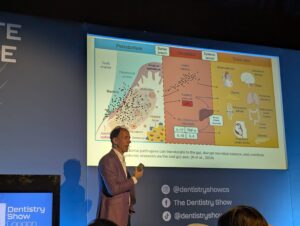
Dr James Goolnik BDS MSc is the founder and Clinical Director of Optimal Dental Health in Baker Street, London. With more than 30 years’ clinical experience, he has a particular interest in prevention, nutrition, oral microbiome research, biological dentistry and the links between oral and general health. He is an author and speaker who encourages patients and fellow dental professionals to look beyond repairing teeth and ask why disease develops.
References and further reading
- National Institute of Dental and Craniofacial Research. Diabetes and Oral Health. https://www.nidcr.nih.gov/health-info/diabetes
- Sanz M, Herrera D, Kebschull M, et al. Treatment of stage I–III periodontitis: The EFP S3 level clinical practice guideline. Journal of Clinical Periodontology (2020). https://pmc.ncbi.nlm.nih.gov/articles/PMC7891343/
- National Institute of Dental and Craniofacial Research. Periodontal (Gum) Disease. https://www.nidcr.nih.gov/health-info/gum-disease
- NICE guideline NG202. Obstructive sleep apnoea/hypopnoea syndrome and obesity hypoventilation syndrome in over 16s. https://www.nice.org.uk/guidance/ng202
- National Institute of Dental and Craniofacial Research. Healthy Mouth, Healthy Body. https://www.nidcr.nih.gov/news-events/nidcr-news/2024/healthy-mouth-healthy-body
This article is for general education and does not replace individual dental or medical advice. Investigations and treatment are recommended according to clinical need.