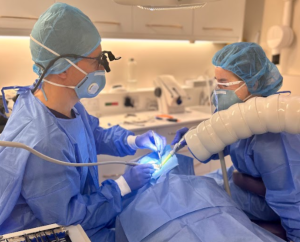
By Dr Pippa Nicholls BDS, Founder of Dimples Oral Care
Walk down the oral care aisle in any supermarket and you’ll be met with dozens of toothpastes all claiming to be the best. Whitening, enamel repair, sensitivity, gum care, charcoal, natural, fluoride-free, hydroxyapatite, it’s no wonder so many people feel overwhelmed.
The reality is that there isn’t one perfect toothpaste for everyone. Our mouths change throughout our lives, and so do our oral health needs. A toothpaste that works brilliantly for a healthy young adult may not be the best option for a child, someone experiencing pregnancy-related gum changes, or an older adult with a dry mouth.
As a dentist, I believe we should move away from choosing toothpaste based on marketing claims and instead focus on what our mouths actually need. More importantly, we should look at the whole formulation rather than a single ‘hero’ ingredient.
Here’s what to consider at each stage of life.
Children: Safety Comes First
Children’s teeth are still developing, and many young children haven't mastered the art of spitting out toothpaste. This means a significant proportion of the toothpaste ends up being swallowed. This is where ingredient selection becomes particularly important.
Hydroxyapatite is especially interesting because it is the same mineral that makes up around 97% of tooth enamel and approximately 70% of dentine. [1] Rather than working through a chemical reaction, it works biomimetically by supplying the same mineral that naturally forms our teeth. For children who are still learning to brush, this offers an appealing option because if small amounts are swallowed, it is simply a naturally occurring calcium phosphate mineral rather than a medicinal active ingredient. Parents should also look beyond the active ingredient.
A children’s toothpaste should ideally be:
Free from SLS or strongly foaming detergents if the child is prone to oral irritation,
ulcers or sensitivity.
Made without unnecessary artificial colours.
Pleasant enough to encourage brushing without tasting like sweets.
Gentle enough for twice-daily use.
Perhaps the biggest factor in preventing childhood tooth decay isn't the toothpaste itself, but establishing consistent brushing habits alongside reducing the frequency of sugary snacks and drinks.
Teenagers: Sugar, Sports Drinks and Braces
The teenage years can be particularly challenging for oral health. Orthodontic braces create countless tiny areas where plaque can accumulate, while many teenagers consume frequent sugary snacks, fizzy drinks and energy drinks. Even those without braces often have diets that place them at increased risk of demineralisation.
A toothpaste for teenagers should focus on:
Supporting enamel remineralisation.
Helping protect against acid attacks.
Being gentle enough for long-term daily use.
Encouraging consistent brushing through a flavour they actually enjoy.
Hydroxyapatite can be particularly beneficial during orthodontic treatment because it helps replenish minerals lost during repeated acid challenges and may help reduce the risk of the white spot lesions that commonly develop around brackets. Of course, no toothpaste can compensate for brushing around braces for just 30 seconds before bed. Good technique and consistency remain the foundations of oral health.
Pregnancy and Breastfeeding
Pregnancy affects far more than people often realise. Hormonal changes can increase inflammation in the gums, making pregnancy gingivitis extremely common. Morning sickness may also expose teeth to stomach acid, while altered eating habits often mean more frequent snacking throughout the day. Many expectant mothers also become more conscious about what they’re putting into and onto their bodies. A gentle toothpaste with a simple ingredient list can therefore be an attractive choice. If you’re experiencing vomiting during pregnancy, remember not to brush immediately afterwards. The stomach acid temporarily softens the enamel surface.
Instead:
Rinse with water.
Wait around 30 minutes before brushing.
Use a remineralising toothpaste as part of your routine.
If pregnancy causes increased sensitivity, a specific sensitive toothpaste may help to reduce
discomfort. During breastfeeding, some parents continue to prefer products with a simple ingredient list. The most important considerations remain effective plaque removal, adequate remineralisation and choosing a formulation that is comfortable enough to use consistently. Speak to your dentist if you are experiencing new sensitivity, dry mouth or gum changes.
Adults with Sensitive Teeth
Dentine sensitivity affects millions of adults and is often described as a short, sharp pain when eating ice cream, drinking hot coffee or even breathing in cold air. Sensitivity usually occurs when dentine becomes exposed, allowing tiny fluid-filled tubules inside the tooth to respond to temperature changes.
Sensitivity toothpastes work in different ways. Some ingredients help reduce the nerve’s response to external stimuli, while others form a protective layer or help block the exposed dentinal tubules. Hydroxyapatite is thought to help by depositing mineral on the dentine
surface and occluding these tubules, while also supporting remineralisation.
Hydroxyapatite takes a different approach. Research suggests it can physically help occlude (seal) exposed dentinal tubules while also supporting remineralisation of weakened enamel. Rather than simply masking symptoms, it aims to reinforce the tooth’s natural structure. [2]
However, it’s equally important to identify why sensitivity has developed. Avoid highly abrasive whitening or charcoal toothpastes, particularly where there is exposed dentine, erosion or gum recession. Abrasivity depends on the complete formulation, so ask your dental professional for advice if sensitivity persists. Aggressive brushing, acid erosion, gum recession or tooth grinding may all require professional assessment.
Dry Mouth and Menopause
Saliva is one of the mouth’s greatest natural defence mechanisms. It helps neutralise acids, delivers minerals back to teeth, lubricates oral tissues and supports a healthy oral microbiome. Some women experience dry mouth, burning sensations, altered taste or increased sensitivity during perimenopause and menopause. Hormonal changes may contribute, although medication, hydration, stress and other health conditions should also be considered.
Choosing a toothpaste for dry mouth means looking for formulations that are:
Free from irritating foaming agents like SLS.
Mildly flavoured rather than intensely minty.
Supportive of the oral microbiome.
Remineralising to help compensate for reduced natural protection.
Many women are surprised to discover that oral symptoms can be one of the lesser-known effects of menopause, yet they can have a significant impact on comfort and quality of life. Persistent dry mouth should not simply be accepted as part of ageing or menopause. A dental assessment can help identify contributing medication, mouth breathing, salivary gland dysfunction or an underlying medical condition.
Receding Gums and Exposed Roots
As gums recede, the root surface becomes exposed. Unlike enamel, root dentine is softer, less mineralised and far more susceptible to both wear and decay. This means protecting exposed roots becomes increasingly important with age.
Look for a toothpaste that helps:
Remineralise exposed dentine.
Reduce sensitivity.
Clean effectively without being overly abrasive.
Support gum health alongside good plaque control.
It’s also worth reviewing brushing technique. Gum recession can be aggravated by brushing too aggressively over many years, particularly when excessive force or a hard-bristled toothbrush is used. For many people, switching to a soft-bristled toothbrush and using a gentler brushing technique can help reduce further mechanical trauma to the gums. [3]
Older Adults and Medication-Related Dry Mouth
Many medications, including those prescribed for high blood pressure, depression, allergies and bladder conditions, can significantly reduce saliva production. This places older adults at increased risk of:
Root surface decay.
Tooth wear.
Oral infections.
Difficulty wearing dentures.
Persistent bad breath.
For this group, toothpaste becomes part of a much broader strategy. An ideal toothpaste should support remineralisation whilst remaining gentle on dry oral tissues. Alongside this, staying well hydrated, stimulating saliva where possible, attending regular dental examinations and reducing frequent sugar intake all become increasingly important.
Why the Whole Formulation Matters
It’s easy to become fixated on one ingredient. Whether it’s hydroxyapatite, fluoride, charcoal or baking soda, marketing often encourages us to judge a toothpaste by a single headline ingredient. In reality, toothpaste is a carefully balanced formulation, and every component influences how well it performs.
When choosing a toothpaste, consider:
The remineralising ingredient
o Does it help strengthen teeth and support enamel?
The abrasivity
o Is it gentle enough for everyday use without unnecessarily wearing enamel or exposed roots?
The foaming agents
Does it contain SLS or another detergent that may be uncomfortable for a sensitive or dry mouth?
The flavourings
o Are they pleasant without overwhelming sensitive mouths?
The preservatives and unnecessary additives
o Could a simpler formulation better suit your needs?
The overall philosophy
Does the toothpaste work with the biology of the mouth rather than simply treating symptoms?
The oral microbiome also deserves consideration. Our mouths contain hundreds of species of bacteria, many of which play beneficial roles in maintaining health. An ideal toothpaste should clean effectively while supporting this delicate ecosystem rather than unnecessarily disrupting it. There is no ‘best’ toothpaste – only the best one for you.
The right toothpaste should reflect your stage of life, your oral health, your medical history and your individual priorities. For many people, a hydroxyapatite toothpaste offers an exciting biomimetic approach to supporting enamel and dentine by working with the body's natural mineral.
But hydroxyapatite alone doesn’t guarantee a great toothpaste. The best formulations combine effective remineralisation with gentle cleansing, thoughtful ingredient selection and long-term support for the health of the entire mouth. Because ultimately, good oral health isn’t about chasing the latest trend, it’s about choosing products that work in harmony with your biology, supporting your teeth and oral microbiome throughout every stage of life.

This guest article was written by Dr Pippa Nicholls, Dentist and founder of Dimples Oral Care. She is the brains behind the natural hydroxyapatite toothpastes, and takes inspiration from her practice and patients to develop formulations and products to truly help you harness your health. Optimal Dental Health has retained editorial control of the clinical content.