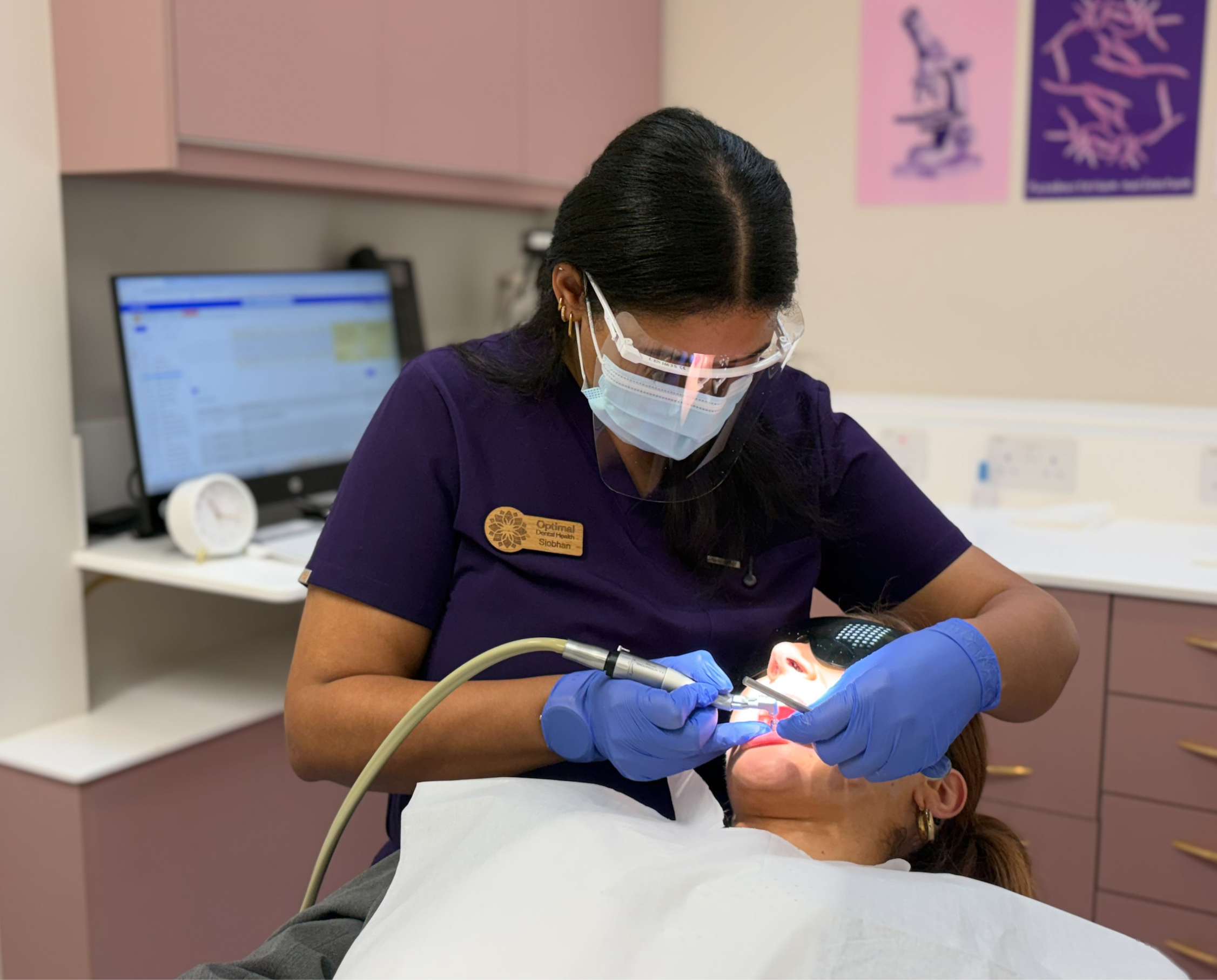
Most of us know that our dentist needs to know about our medical history. But have you ever wondered why?
What does having a heart condition mean for a dental extraction? Can you visit the hygienist while taking blood thinners? And why might your dentist ask about osteoporosis medication, diabetes or recent surgery?
Your mouth is part of your body, and what’s happening elsewhere in your body can make a real difference to your dental health and the treatment you receive.
At Optimal Dental Health, our holistic dental practice in Baker Street, London, we look beyond your teeth and gums. Understanding your medical history, medications and overall health helps us plan care that’s safe, personalised and focused on long-term health.
Whether you have a heart condition, take blood-thinning medication or are recovering from surgery, our dental team considers your wider health when planning your treatment.
Here’s what you need to know before your next dental appointment.
1. Heart Conditions: Do You Need Antibiotics Before Dental Treatment?
Most people with heart conditions do not require antibiotics before routine dental treatment. However, patients with certain high-risk conditions, including previous infective endocarditis or prosthetic heart valves, may benefit from antibiotics before procedures such as dental extractions or oral surgery.
At Optimal Dental Health, we assess your individual risk and follow current UK clinical guidance, consulting your cardiologist when appropriate. We also recognise that maintaining healthy gums and treating oral infections are important parts of reducing potential risks. [1] [2]
Further reading: NICE Guidelines – Prophylaxis Against Infective Endocarditis
2. Can You Visit the Dentist After a Heart Attack or Stroke?
If you’ve recently experienced a heart attack or stroke, it’s important to inform your dentist before undergoing treatment.
Some elective dental procedures may need to be postponed while you recover, particularly if your cardiovascular condition is unstable.
There is no single waiting period that applies to everyone. The appropriate timing depends on your recovery, medications, the type of dental procedure and advice from your medical team.
For urgent dental problems, such as severe toothache or infection, our dentists can discuss suitable treatment options and coordinate with your medical team where necessary.
3. Dental Treatment During Chemotherapy or Cancer Treatment
Cancer treatment can affect your oral health in several ways. Chemotherapy, radiotherapy to the head and neck, and stem cell transplantation may increase the risk of complications such as:
- Dry mouth and oral discomfort
- Mouth ulcers and inflammation
- Oral infections
- Changes in taste
- Delayed healing
Some cancer treatments can also affect the jawbone and influence decisions about extractions or dental implants. [4]
- Bisphosphonates, such as alendronic acid or zoledronic acid.
- Denosumab, which is also used for osteoporosis and some cancers.
- Increased risks associated with extractions and jawbone healing in some patients taking these medicines.
If you’re undergoing cancer treatment, it’s important that your dentist understands your treatment plan.
Our holistic dental team in Marylebone can work alongside your oncology team to assess which dental procedures are appropriate and when they can be performed safely. [5]
4. Dental Appointments After Surgery: What Should You Know?
Have you recently undergone a hip replacement, knee replacement, cataract surgery or pacemaker insertion? Depending on the procedure and your recovery, we may need to make adjustments to your dental appointment.
For example, some patients recovering from joint replacement surgery may be advised to postpone elective invasive dental procedures. However, antibiotics are not generally recommended solely because someone has a prosthetic joint.
Following eye surgery or pacemaker insertion, considerations may include your recovery, comfort, medications and the type of dental equipment being used.
Our advice: Always inform your dentist about recent surgery, even if it seems unrelated to your oral health.
5. Can You Have Dental Treatment While Taking Blood Thinners?
Yes. Many patients taking anticoagulants can safely receive dental treatment with appropriate precautions. If you take warfarin, your dentist may need to check your latest INR result before carrying out procedures that could cause bleeding.
For some dental procedures, an INR result obtained within the previous 72 hours may be appropriate, although more recent testing can be necessary depending on your circumstances.
Patients taking newer anticoagulants, such as apixaban or rivaroxaban, may require a different approach. [3]
Important: Never stop taking prescribed blood-thinning medication without appropriate advice from your healthcare professional.
Our dentists will assess your individual circumstances and use suitable measures to manage bleeding when necessary.
6. Why Your Medical History Matters to Your Dentist
At Optimal Dental Health, we take a whole-body approach to dentistry. We recognise that your oral health does not exist in isolation from the rest of your body.
Before your appointment, please tell us about:
- Any existing or newly diagnosed medical conditions
- Changes to your prescribed medications
- Recent hospital admissions or surgery
- Upcoming medical treatments
- Allergies or previous reactions to dental treatment
Sharing this information allows us to tailor your dental care, identify potential risks and communicate with your GP or medical specialist where appropriate.
Looking for a Holistic Dentist in Baker Street, London?
At Optimal Dental Health, we combine prevention-led dentistry with an understanding of the relationship between oral health and overall wellbeing.
Located at 1 Melcombe Street, Baker Street, London NW1 6AE, our practice welcomes patients from Marylebone, Regent’s Park and across London who are looking for a personalised approach to dental care.
Whether you’re managing a long-term health condition, taking regular medication or simply want reassurance before your next dental appointment or hygiene appointment, our team is here to help.
Your health, safety and wellbeing are central to every treatment decision we make.
Book Your Dental Appointment in London
If you’re concerned about how your medical history might affect your dental treatment, we’d be happy to discuss your circumstances. You can also find out more about our approach and philosophies.
Contact Optimal Dental Health:
📍 1 Melcombe Street, Baker Street, London NW1 6AE
📧 hello@optimaldental.co.uk
🌐 You can also book online using our portal
Book your appointment today and discover a more personalised approach to holistic dental care.
Clinical References:
[1] NICE CG64 – Prophylaxis Against Infective Endocarditis
[2] SDCEP – Antibiotic Prophylaxis Against Infective Endocarditis
[3] SDCEP – Anticoagulants and Antiplatelet Drugs
[4] SDCEP – Medication-related Osteonecrosis of the Jaw
[5] NHS Specialist Pharmacy Service – Dental Management of Patients With Cancer