The Science Behind Matcha and Oral Health
By Dr James Goolnik, Clinical Director at Optimal Dental Health, London
Matcha has become one of the most popular wellness drinks, celebrated for its antioxidants, natural caffeine and potential health benefits. But is matcha good for your teeth and gums? And could drinking matcha influence your oral microbiome?
As a dentist with over 30 years of experience and a qualified nutritionist, I’m particularly interested in the relationship between what we consume and the health of our mouths.
Firstly, what is the difference between green tea and matcha? Both matcha and conventional green tea come from the same plant, Camellia sinensis. The difference is how they are grown and prepared. Matcha is produced from specially cultivated tea leaves that are ground into a fine powder.
Rather than steeping the leaves and throwing them away, you drink the powdered leaf itself. This means you’re consuming naturally occurring compounds including:
- Catechins: Plant polyphenols, including EGCG, studied for their antioxidant and antimicrobial effects.
- L-theanine: An amino acid associated with relaxation and attention.
- Caffeine: A natural stimulant that can improve alertness.
- Other polyphenols: Compounds being investigated for their potential influence on inflammation and microbial activity.
But what does this mean for your mouth? Is Matcha good for your teeth?
Three ways matcha may support oral health
1. Matcha and your gum health: Could it help reduce gum inflammation?
Gum disease is associated with a disrupted oral microbiome and an inflammatory response to dental plaque. Research into green tea has found associations between tea consumption and healthier periodontal measurements.
A 2009 study published in the Journal of Periodontology identified an association between green tea consumption and more favourable periodontal measurements.
More recently, research has examined matcha specifically. A 2025 pilot study involving 27 adults with localised gingivitis reported reductions in plaque accumulation, gum bleeding and a marker of oxidative stress after participants consumed matcha twice daily for 30 days.
However, because this was a small study without a separate untreated comparison group, the results cannot establish that matcha itself caused these improvements.
Another 2025 randomised controlled trial involving 41 participants found improvements in gum health measurements in both the matcha and control groups, without demonstrating significantly greater clinical periodontal benefits from matcha consumption.
Matcha may complement a healthy oral care routine, but it cannot replace professional gum treatment or effective daily plaque removal.
2. Matcha and your oral microbiome
This is the area that interests me most.
Your mouth contains hundreds of different bacterial species. Many play important roles in maintaining oral health, and the goal should not be to eliminate them all.
One bacterium associated with periodontal disease is Porphyromonas gingivalis.
A 2024 study found that matcha inhibited this bacterium in laboratory experiments. A small clinical component also reported reduced salivary levels of P. gingivalis following matcha mouthwash use.
This is exciting research, although it does not prove that drinking matcha will rebalance your oral microbiome.
At Optimal Dental Health, we focus on understanding your individual oral microbial environment rather than simply trying to kill bacteria.
3. Could matcha help prevent bad breath and tooth decay?
Green tea polyphenols have been studied for their effects on bacteria involved in dental decay and the sulphur compounds responsible for some types of bad breath. Laboratory findings are encouraging, but we do not yet have enough high-quality human research to recommend matcha as a treatment for tooth decay or halitosis.
One thing we do know is that replacing a sugary drink with unsweetened matcha is generally a tooth-friendlier choice.
How to prepare matcha properly
You don’t need expensive equipment or a complicated ceremony to enjoy good matcha. Here’s how I recommend making it.
Choose good-quality matcha
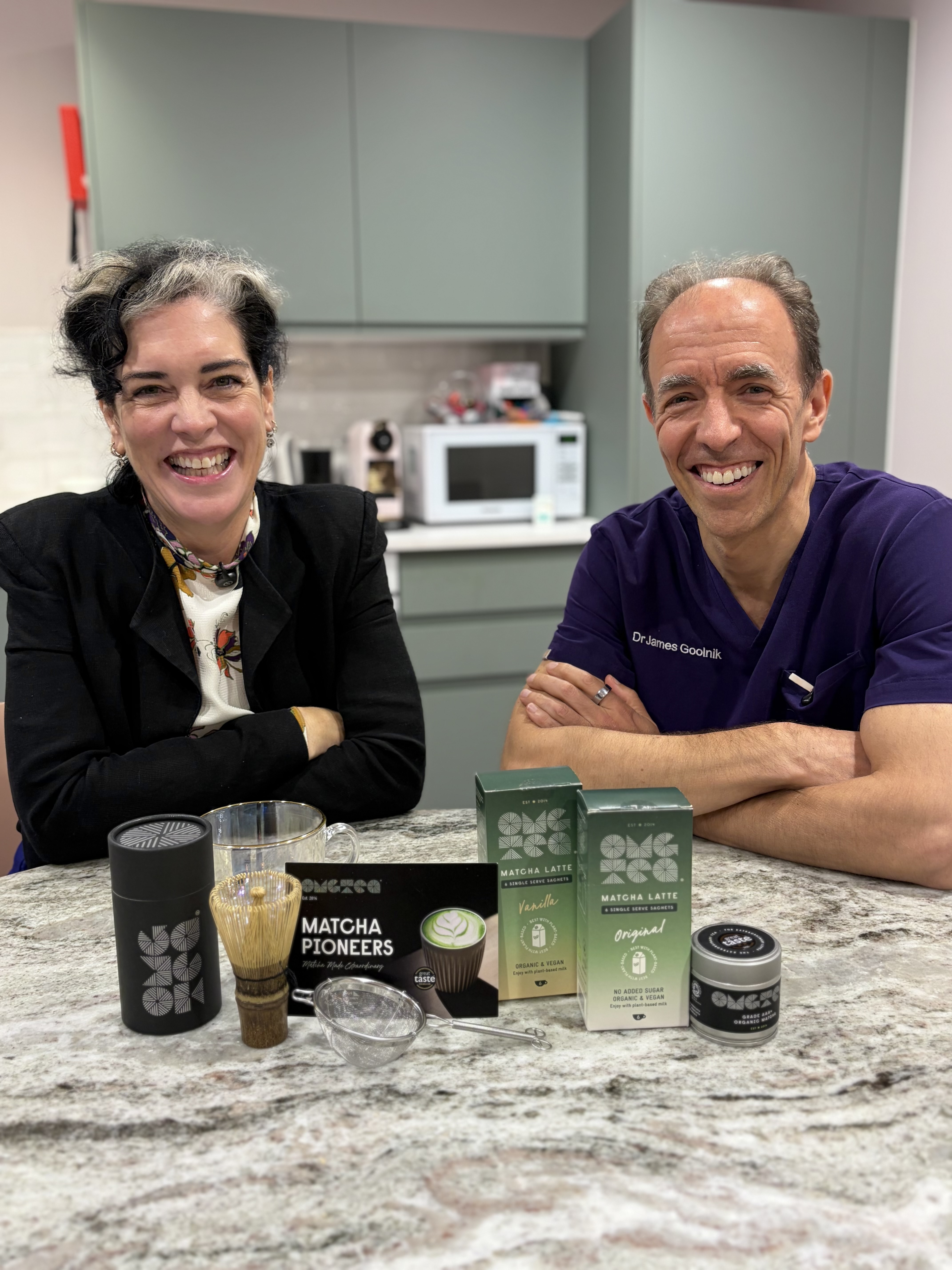
Look for pure matcha powder without added sugar, artificial colours or flavourings. Choose a supplier that provides clear information about sourcing and independent contaminant testing. I love ceremonial matcha from OMGTEAs.
Use around 1-2g of matcha
Sift the powder into a small bowl or wide cup to help prevent lumps.
Add water at 70°C
Avoid pouring boiling water directly onto the powder. Water around 75°C generally produces a smoother, less bitter flavour.
Whisk rather than stir
Add approximately 60ml of warm water and whisk briskly in an M-shaped motion until smooth and slightly frothy. A traditional bamboo whisk works beautifully, although a small electric frother is fine.
Enjoy without added sugar
Drink it as it is, or dilute it with a little more water to suit your taste. You can also prepare iced matcha using the same method before adding chilled water and ice.
Should you add milk to matcha?
This is an interesting question, particularly as matcha lattes have become so popular.
Matcha contains EGCG and other catechins, and researchers have investigated whether proteins in milk bind to these compounds and affect their absorption.
One human study found that adding milk to green tea extract reduced absorption of EGCG. However, other studies have reported little or no reduction in certain measures of catechin absorption or antioxidant activity.
It is therefore too simplistic to say that milk cancels out the health benefits of matcha.
My preference is to drink matcha with water, without milk and definitely no sweeteners. This allows you to enjoy the tea in its simplest form, although we cannot yet say that this delivers greater clinical oral health benefits.
If you prefer a latte, that’s fine too. The more important dental consideration is avoiding sugary syrups and sweetened milks, particularly if you’re sipping your drink over a prolonged period.
And remember, plant-based milks aren’t automatically healthier for your teeth. Check the ingredients, particularly the added sugar content.
Five mistakes to avoid when drinking matcha
- Adding sugar or flavoured syrups. Frequent sugar exposure encourages acid production by plaque bacteria and increases tooth decay risk.
- Using boiling water. This can make matcha taste unnecessarily bitter.
- Assuming all matcha is the same. Quality, growing conditions, storage and testing can vary between suppliers.
- Sipping sweetened matcha throughout the morning. How frequently your teeth are exposed to sugar matters, not simply how much you consume.
- Thinking matcha can replace dental care. No drink can substitute for a healthy diet, effective daily cleaning and personalised professional care.
How much matcha should you drink?
Some recent clinical studies investigated two cups daily for 30 days, but this does not establish an ideal or medically recommended dose. Matcha contains caffeine, with levels varying according to the product and serving size. If you’re sensitive to caffeine, pregnant, taking medication or managing a medical condition, your intake may need to be adjusted. For most adults who tolerate caffeine, enjoying a modest serving of unsweetened matcha can be part of a balanced diet.
My final thoughts: A healthy mouth starts with what you do every day
I often tell my patients that oral health is about much more than brushing and flossing. What we eat and drink can influence saliva, microbial activity, inflammation and the environment in which our oral bacteria live.
Matcha is a fascinating example of the connection between nutrition and dentistry. The science is promising, but we need larger, longer-term clinical trials before making strong claims about its benefits.
My advice? Choose good-quality matcha, prepare it carefully, avoid added sugars and enjoy it as part of a varied, nutrient-dense diet.
And if you’re concerned about bleeding gums, persistent bad breath or recurrent dental problems, it’s worth investigating what’s happening within your oral microbiome rather than relying on any single food or drink.
At Optimal Dental Health in London, we take a prevention-first approach to dentistry, exploring the links between nutrition, the oral microbiome and whole-body health.
Learn more about our approach to biological and functional dentistry
Frequently asked questions
Does matcha stain your teeth?
Matcha contains pigments and polyphenols that may contribute to surface staining, although the degree of staining varies. Regular dental hygiene care can help manage extrinsic staining.
Is matcha better for your teeth than coffee?
Unsweetened matcha can be a good alternative to coffee, but there isn’t sufficient clinical evidence to say it is universally better for your teeth. Additives, drinking frequency and individual oral health all matter.
Can matcha cure gum disease?
No. There is currently insufficient evidence to recommend matcha as a treatment for gingivitis or periodontitis.
Is it better to drink matcha with water or milk?
I prefer water, particularly when the goal is to enjoy pure matcha without added ingredients. However, evidence that avoiding milk produces greater health benefits is inconclusive.
Meet the Author: Dr James Goolnik

Clinical Director | Optimal Dental Health, Baker Street, London
Dr James Goolnik is an award-winning dentist, Clinical Director of Optimal Dental Health and a qualified nutritionist with over 30 years of experience in dentistry.
With a particular interest in holistic and biological dentistry, Dr James focuses on understanding the connections between oral health, nutrition, the oral microbiome and overall wellbeing.
His approach combines evidence-informed dental care with a strong emphasis on prevention, minimally invasive treatment and supporting patients to make informed decisions about their long-term health.
Dr James is also an internationally recognised speaker, author and educator who is passionate about making complex dental and health topics accessible to the wider public.
At Optimal Dental Health in Baker Street, London, he works alongside a multidisciplinary team of dental and healthcare professionals to deliver personalised care that considers the mouth as part of the whole body.
Through his writing, speaking engagements and clinical work, Dr James aims to empower patients with practical, scientifically grounded information that helps them take greater control of their oral and overall health.
Interested in understanding your oral health more deeply?
Book a comprehensive Dental Health Check at Optimal Dental Health.
Scientific references
1. [1] Nakao R, et al. Multimodal inhibitory effect of matcha on Porphyromonas gingivalis. Microbiology Spectrum. 2024. PMID: 38771061. View study
2. [2] Abood RS, et al. Does Daily Intake of Matcha Tea Enhance The Periodontal Health of Patients With Localised Gingivitis? Oral Health & Preventive Dentistry. 2025. PMID: 40932098. View study
3. [3] Yousif AT, et al. Clinical and Salivary Antioxidant Effects of Matcha Tea in Patients with Gingivitis: A Randomized Controlled Trial. The Open Dentistry Journal. 2025. DOI: 10.2174/0118742106414754250902072707. View study
4. [4] Kushiyama M, et al. Relationship between intake of green tea and periodontal disease. Journal of Periodontology. 2009. PMID: 19254120. View study
5. [5] Egert S, et al. Simultaneous ingestion of dietary proteins reduces the bioavailability of galloylated catechins from green tea in humans. European Journal of Nutrition. 2013. PMID: 22366739. View study
6. [6] van het Hof KH, et al. Bioavailability of catechins from tea: the effect of milk. European Journal of Clinical Nutrition. 1998. PMID: 9630386. View study
7. [7] Narotzki B, et al. Green tea: a promising natural product in oral health. Archives of Oral Biology. 2012. PMID: 22226360. View study