What to Do If a Filling Falls Out: Holistic Dental Advice
A filling falling out can happen without warning. You may suddenly notice a hole in your tooth while eating, experience sensitivity to cold drinks, or even discover your filling sitting in your mouth.
What Should You Do If Your Filling Falls Out?
Losing a filling can be alarming, but in most cases it is not a dental emergency, as long as you act quickly. The exposed tooth may become sensitive to hot, cold or sweet foods, and the longer it is left untreated, the greater the risk of bacteria entering the tooth and causing decay or infection.
If your filling has fallen out, follow these steps:
1. Stay Calm and Inspect the Area
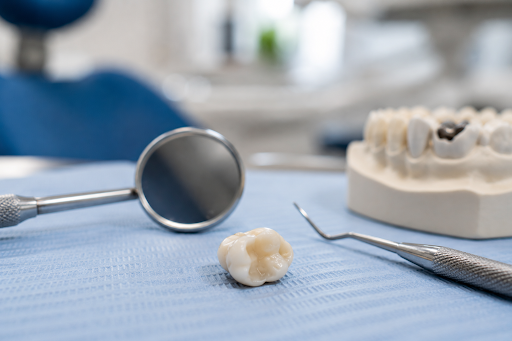
If possible, retrieve the filling. Although it usually cannot be reused, your dentist may wish to examine it. Look in a mirror to see whether the tooth has simply lost a small filling or whether a larger portion of the tooth has fractured.
If you experience severe pain, swelling, bleeding or notice that a significant part of the tooth has broken away, contact your dentist immediately.
2. Keep the Tooth Clean
An exposed cavity can trap food and bacteria very easily. Gently brush the area using a soft toothbrush and rinse your mouth with warm salt water after eating. This helps reduce bacterial build-up and keeps the area as clean as possible until your appointment.
Avoid vigorous poking or scraping inside the cavity, as this may irritate the tooth further.
3. Avoid Chewing on That Side
Try to chew on the opposite side of your mouth until your filling has been replaced.
Hard foods such as nuts, crusty bread, boiled sweets and ice can cause the remaining tooth structure to fracture, potentially turning a simple filling replacement into a more complex restoration such as an onlay or crown.
Sticky foods like toffee or chewing gum should also be avoided. You can find out more about nutritional therapy with our in-house nutrition coach Zara Stella here.
4. Protect Sensitive Teeth
It is completely normal for the tooth to feel more sensitive once the filling has come out. The exposed dentine can react to temperature changes and sweet foods.
Until you are seen by your dentist, try to avoid:
- Very hot drinks
- Ice-cold foods and beverages
- Sugary snacks
- Acidic foods such as citrus fruits and fizzy drinks
Using a toothpaste designed for sensitive teeth may also help reduce discomfort.
5. Consider a Temporary Filling Kit
If you cannot see a dentist immediately, a pharmacy may stock a temporary dental filling repair kit.
These temporary materials are not a permanent solution, but they can help protect the tooth for a short period by reducing sensitivity and preventing food from becoming trapped.
Avoid using household glues or DIY repair methods, as these can damage the tooth and make treatment more difficult.
6. Book a Dental Appointment Promptly
Even if the tooth is not painful, you should arrange an appointment as soon as possible.
A lost filling is often a sign that the restoration has reached the end of its lifespan or that new decay has developed underneath it. Leaving the tooth untreated increases the likelihood of bacteria entering the pulp, potentially leading to infection and the need for root canal treatment or even extraction.
At Optimal Dental Health, we will carefully assess the tooth to determine why the filling failed and recommend the most conservative treatment possible. Depending on the amount of remaining healthy tooth structure, this may involve replacing the filling, placing a ceramic onlay or crown, or, in some cases, considering more advanced treatment if the tooth has become infected.
[Embed James YouTube video here] – What to do if a filling comes out (Reel)
At Optimal Dental Health, our holistic dentists in London take a biological approach to restoring teeth. Rather than simply replacing the missing filling, we aim to understand why it failed, assess the health of the tooth underneath, and restore it using modern biocompatible materials that support your long-term oral health.
If your filling has fallen out and you are based near Baker Street, Marylebone, Harley Street, Regent’s Park or Central London, our team can assess the tooth and advise whether a filling, onlay or crown is needed.Need help with a lost filling? Call 020 3921 1000 or book an emergency dental appointment.
Whether your filling has fallen out during a meal, while flossing, or seemingly for no reason, this guide explains exactly what you should do next.
Is a Lost Filling a Dental Emergency?
A lost filling is not always an emergency, but it should never be ignored.
Once a filling falls out, the underlying tooth is exposed. This layer of dentine contains microscopic tubules that communicate with the nerve inside the tooth. Without the protective seal of the filling, bacteria, food debris and temperature changes can reach the tooth more easily.
This may result in:
- Tooth sensitivity
- Pain when biting
- Sharp pain with cold drinks
- Food trapping
- Cracks developing
- Further decay
- Infection requiring root canal treatment if left untreated
If you experience severe pain, facial swelling, pus, fever or difficulty swallowing, you should seek urgent dental care immediately.
Why Do Fillings Fall Out?
Fillings are extremely durable, but they are not designed to last forever. Several factors can contribute to filling failure.
1. Normal Wear and Tear
Every day your teeth withstand hundreds of pounds of pressure while chewing.
Over time, fillings gradually wear, particularly larger restorations that absorb greater forces.
Although modern composite fillings are highly durable, no dental restoration lasts forever. Their lifespan depends on factors such as the size of the filling, your bite, oral hygiene, diet and whether you grind your teeth. [1]
2. Tooth Decay Underneath the Filling
Sometimes bacteria enter tiny gaps around an existing filling.
This can cause secondary decay, where the tooth begins decaying underneath an otherwise intact restoration.
Eventually the remaining tooth structure weakens and the filling may simply detach.
3. Teeth Grinding (Bruxism)

Many people unknowingly grind or clench their teeth during sleep. This repeated pressure places a lot of stress on both teeth and fillings, increasing the likelihood of fractures and lost restorations.
At Optimal Dental Health, we routinely assess bite function and airway health because these often contribute to bruxism.
4. Large Existing Fillings
The larger the filling, the less natural tooth remains. As the remaining tooth weakens, it becomes increasingly difficult for the restoration to stay securely attached. In these situations, a ceramic onlay or crown may offer a stronger long-term solution.
Trauma: How Injuries Can Dislodge Dental Fillings
Sports injuries, falls or accidentally biting hard foods can dislodge fillings instantly. Ice cubes, popcorn kernels and unpopped corn are common culprits.
6. Age of the Filling
Dental materials naturally age. Repeated expansion and contraction from hot and cold foods eventually weakens the bond between the filling and the tooth.
Can You Buy a Temporary Filling Kit?
Temporary filling kits available from pharmacies may help protect the tooth for a short period. However, these are only temporary measures and you should still arrange an appointment with your dentist as soon as possible.
They do not:
- Remove decay
- Treat infection
- Restore tooth strength
- Replace professional dental treatment
How Soon Should You See a Dentist?
Ideally, within 48 hours. The longer the tooth remains exposed, the greater the chance of:
- bacterial contamination
- fracture
- increasing sensitivity
- decay progression
- nerve inflammation
If you are experiencing significant pain, you should seek an emergency dentist in London immediately. You can call our team on 020 3921 1000 or email hello@optimaldental.co.uk.
Our Holistic Approach to Replacing a Lost Filling

At Optimal Dental Health in Baker Street, we believe replacing a filling should never simply involve adding more material. Instead, we perform a comprehensive 15-point dental health check to understand why the restoration failed.
This includes evaluating:
- bite forces
- tooth cracks
- existing decay
- gum health
- oral bacteria
- overall tooth strength
- previous restorations
- lifestyle habits such as grinding
This holistic philosophy helps us provide longer-lasting, more conservative treatment whenever possible.
Mercury-Free and Biocompatible Dentistry

As a holistic dental practice in London, we exclusively place tooth-coloured, biocompatible composite restorations rather than amalgam in routine restorative care. Our modern materials are carefully selected for their:
- aesthetics
- durability
- conservative preparation
- biocompatibility
Whenever possible, we preserve as many healthy natural teeth as we can. We also provide safe mercury filling removal using the SMART protocol. Protecting healthy tooth tissue is a core principle of biological dentistry.
When a Filling Isn’t Enough
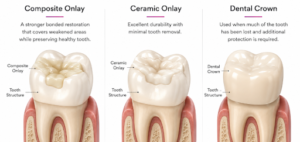
Sometimes a filling falls out because the remaining tooth has become too weak. In these situations, repeatedly replacing another filling may actually increase the risk of fracture. Instead, your dentist may recommend:
Composite Onlay
A stronger bonded restoration that covers weakened areas while preserving healthy tooth.
Ceramic Onlay
Excellent durability with minimal tooth removal.
Dental Crown
Used when much of the tooth has been lost and additional protection is required. Our clinicians always recommend the most conservative treatment suitable for your individual tooth.
Preventing Future Fillings From Falling Out
Although no restoration lasts forever, several habits can significantly increase longevity.
These include:
Our biological hygiene appointments include advanced plaque assessment using phase contrast microscopy, allowing patients to see the bacteria living within their oral biofilm in real time. This enables highly personalised preventive care designed to reduce future decay.
- excellent daily brushing
- interdental cleaning
- reducing sugar frequency
- attending regular dental examinations
- professional hygiene appointments
- wearing a night guard if you grind your teeth
- addressing bite problems early
- maintaining a healthy oral microbiome
What to Do If Your Filling Falls Out (At a Glance)
If your filling has fallen out:
✔ Keep the tooth clean
✔ Avoid chewing on that side
✔ Avoid very hot, cold or sugary foods
✔ Use a temporary filling kit if necessary
✔ Book a dentist within 24 48 hours
✔ Seek urgent care if you develop swelling, severe pain or fever
Why Choose Optimal Dental Health?

If you’re searching for a holistic dentist in London or an emergency dentist near Baker Street, our multidisciplinary team combines advanced technology with minimally invasive dentistry.
Our approach includes:
- Mercury-free restorative dentistry
- Biocompatible materials
- Comprehensive diagnostics
- Digital imaging
- Airflow and biological hygiene therapy
- Oral microbiome testing
- Ozone therapy
- Prevention-first philosophy
- Individualised treatment planning
Our goal is always to preserve your natural teeth wherever possible while supporting your overall health.
Frequently Asked Questions
What happens if my filling falls out and I do nothing?
Leaving a missing filling untreated allows bacteria to enter the tooth. Over time this can lead to decay, fractures, infection and potentially the need for root canal treatment or extraction.
According to the World Health Organization, untreated tooth decay in permanent teeth affects approximately 2.5 billion people worldwide, making it the most common health condition globally. [2]
Can I eat if my filling falls out?
Yes, but avoid chewing on the affected side and stay away from hard, sticky or sugary foods until the tooth has been repaired.
Is it normal for an old filling to fall out?
Yes. Fillings experience years of chewing forces and naturally wear over time. Older fillings are more likely to fail than newer restorations.
Can my filling simply be glued back in?
Usually not. Most fillings cannot be reattached because the bonding surfaces have been contaminated or damaged.
Will I always need another filling?
Not necessarily. If the tooth has weakened significantly, your dentist may recommend an onlay or crown for greater long-term protection.
Can I brush my tooth if the filling has fallen out?
Yes, brush gently with a soft toothbrush and avoid poking inside the cavity.
Is losing a filling painful?
Some people experience no discomfort at all, while others notice sensitivity to temperature, pressure or sweet foods. Pain depends on how much of the tooth is exposed.
Can a filling fall out while flossing?
Occasionally, yes. However, flossing itself is rarely the cause. It usually indicates that the filling had already become loose or compromised.
Where can I find an emergency holistic dentist in London?
Optimal Dental Health, located just moments from Baker Street Station in Marylebone, provides comprehensive emergency dental assessments alongside holistic, minimally invasive restorative care using modern biocompatible materials.
About the Author: Dr James Goolnik BDS

Dr James Goolnik is the Clinical Director of Optimal Dental Health in London and one of the UK’s leading advocates for holistic and biological dentistry. With over 30 years of clinical experience, he has developed a prevention-focused approach that considers the connection between oral health and overall wellbeing.
Dr Goolnik has completed advanced postgraduate training in restorative dentistry, SMART amalgam removal, oral microbiome testing, airway health, sleep dentistry and minimally invasive techniques. He lectures internationally on holistic dental care and is passionate about helping patients preserve their natural teeth using evidence-based, biocompatible treatment approaches.