Is Water Flossing Effective?
Yes. Water flossing can help reduce bleeding gums, gingival inflammation and food debris between the teeth, especially when used daily alongside brushing. It is particularly useful for people with gum disease, dental implants, bridges, braces, crowded teeth or difficulty using string floss. It does not remove hardened tartar and should not replace professional dental hygiene appointments.
Water flossers have become increasingly popular over the past decade, particularly among people looking for a gentler, easier way to clean between their teeth. But can a stream of water really replace traditional floss? Do dentists actually recommend them? And are they effective if you’re trying to prevent gum disease?
The short answer is yes. Clinical studies suggest water flossing can be highly effective for improving gum health, especially when used correctly as part of a wider oral hygiene routine.
At Optimal Dental Health in Baker Street, London, we take a biological approach to dentistry. We understand that oral health isn’t simply about having clean teeth, it’s about supporting a healthy oral microbiome, reducing inflammation, and protecting your whole-body health.
In this article, we’ll explain exactly how water flossers work, what the research says, who benefits most, and why we often recommend them alongside our Biological Hygiene Appointments.
What Is a Water Flosser?
A water flosser (also called an oral irrigator) uses a pressurised stream of water to clean between the teeth and around the gumline. Rather than physically scraping plaque away like traditional floss, the pulsating water helps to:
- Remove loose plaque and food debris
- Flush bacteria from below the gumline
- Reduce inflammation around the gums
- Reach difficult areas around braces, implants and bridges
- Massage gum tissue to improve circulation
Does Water Flossing Actually Work?
The evidence says yes. Numerous clinical studies have shown that water flossing can significantly improve gum health by reducing bleeding, inflammation and harmful bacteria. Research has demonstrated improvements in:
- Gingivitis
- Bleeding gums
- Plaque around orthodontic appliances
- Implant maintenance
- Periodontal maintenance
A 2019 systematic review published in the International Journal of Dental Hygiene concluded that oral irrigation significantly reduces gingival bleeding and inflammation when used alongside toothbrushing. [1]
One systematic review concluded that oral irrigation is an effective addition to toothbrushing for improving gingival health. Unlike traditional floss, the pulsating water can penetrate several millimetres below the gumline, reaching areas where toothbrush bristles simply cannot.
Clinical Evidence
- EFP S3 Clinical Practice Guideline on Periodontitis (European Federation of Periodontology) https://www.efp.org
- American Dental Association – Oral Health Topics https://www.ada.org
Water Flosser vs Traditional Floss
This is a question our dental hygienists in London hear most often. The answer isn’t that one is “good” and the other is “bad.” Each has its strengths.
| Traditional Floss | Water Flosser |
| Physically scrapes plaque from tooth surfaces | Flushes bacteria and debris from between teeth and below gums |
| Excellent when technique is perfect | Easier for most people to use consistently |
| Requires good dexterity | Ideal for reduced dexterity |
| Can be awkward around braces | Excellent around orthodontics |
| Difficult around implants and bridges | Cleans implants and bridges effectively |
At Optimal Dental Health, we often recommend using both where possible. Think of traditional floss as cleaning the walls of a swimming pool. Think of a water flosser as changing the water inside it. Together they provide excellent results.
Why Water Flossing Is Especially Helpful for Gum Disease
Gum disease begins when harmful bacteria accumulate around the gumline. These bacteria form a sticky biofilm which triggers inflammation. If left untreated, this can develop into:
- Gingivitis
- Periodontitis
- Gum recession
- Bone loss
- Tooth mobility
A water flosser helps disrupt this biofilm every day. While it doesn’t replace professional cleaning, it helps reduce the bacterial load between appointments, making it much easier to maintain healthy gums. This is particularly valuable for anyone who has previously suffered from gum disease.
Water Flossing and the Oral Microbiome
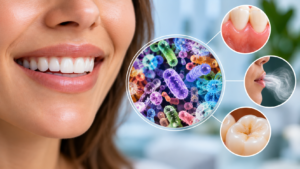
One of the biggest differences between conventional dentistry and biological dentistry is how we think about bacteria. Your mouth is home to hundreds of different bacterial species that make up your oral microbiome, a complex ecosystem where both beneficial and harmful bacteria coexist.
The goal isn’t to eliminate bacteria altogether, but to maintain a healthy balance. When harmful bacteria begin to dominate, a process known as oral dysbiosis, they form a sticky biofilm around the teeth and gums. This can lead to inflammation, gingivitis, periodontitis and tooth decay, and research increasingly links poor oral health with wider health conditions such as cardiovascular disease and diabetes.
Water flossing supports a healthier oral microbiome by helping to disrupt and flush away harmful biofilm, food debris and bacteria from around the teeth and below the gumline. Unlike antiseptic mouthwashes, which can reduce both beneficial and harmful bacteria, water flossing physically cleans these areas without unnecessarily disturbing the natural balance of the oral environment.
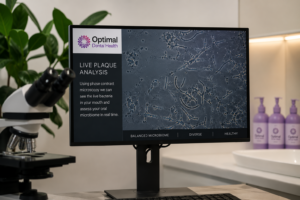
At Optimal Dental Health, we take a personalised approach to prevention. During our Biological Hygiene Appointments, we use live plaque sampling and phase contrast microscopy so you can see the bacteria in your own mouth and better understand your oral health.
Combined with tailored home-care advice, including water flossing where appropriate, our aim is to support healthier gums, a balanced oral microbiome and long-term whole-body wellbeing.
Who Benefits Most from Water Flossing?
Almost everyone can benefit, but it’s particularly helpful for people who have:
- Bleeding gums
- Gum disease
- Dental implants
- Bridges
- Crowns
- Braces or Invisalign attachments
- Crowded teeth
- Arthritis or limited hand dexterity
- Sensitive gums
- Dry mouth
Many people who struggle with traditional floss find that they are much more likely to use a water flosser consistently. And consistency is one of the biggest predictors of long-term oral health.
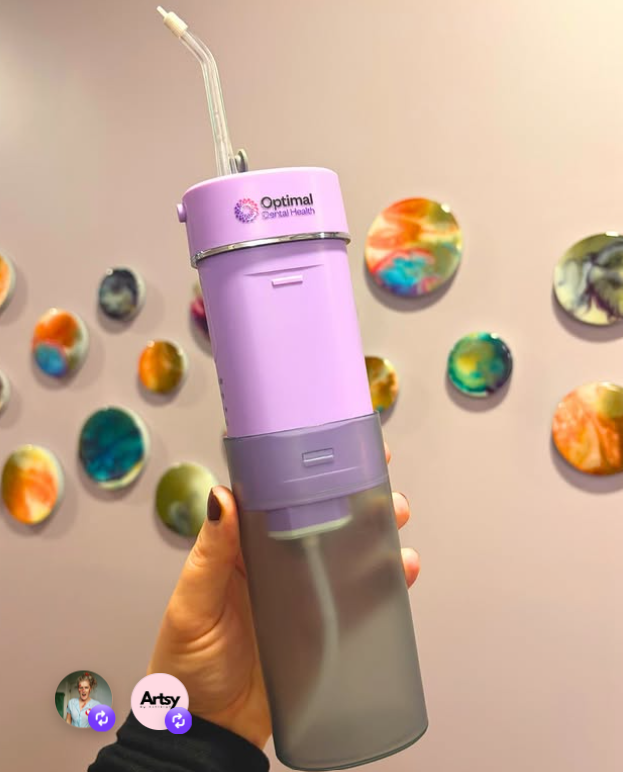
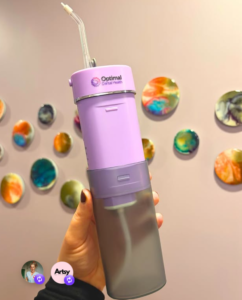
Now Available: The Optimal Dental Health Ozone Water Flosser
Our holistic dentists London recommend taking water flossing one step further with our very own Optimal Dental Health Ozone Water Flosser.
As well as providing all the benefits of traditional water flossing, it generates ozonated water, which has powerful antimicrobial properties that can help reduce harmful bacteria while supporting a healthier oral environment.
Our Ozone Water Flosser is available for £80 and can be ordered directly through our front-of-house team. We can post one straight to your door anywhere in the UK, or you’re welcome to pop into the practice and purchase one in person. Simply call us on 0203 921 1000 or email hello@optimaldental.co.uk to place your order.
We also provide you with Ozone Therapy in London for dental treatments such as tooth extractions and dental hygiene. You can find out more about Ozone treatment here.
Water Flossing Around Dental Implants
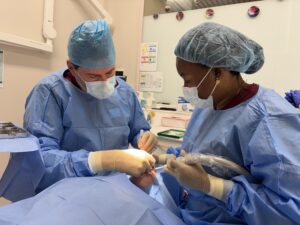
Dental implants require meticulous cleaning. Unlike natural teeth, implants don’t have the same protective ligament surrounding them, meaning inflammation around implants (peri-implant mucositis and peri-implantitis) can progress quickly if plaque accumulates.
Water flossers are excellent for cleaning around implant restorations because they help remove bacteria from difficult-to-reach areas without placing excessive force on the surrounding tissues.
For our implant patients, we frequently recommend incorporating water flossing into their daily routine alongside interdental brushes where appropriate.
Water Flossing Is Not a Replacement for Professional Hygiene
Even the best home care cannot remove hardened tartar (calculus). Once plaque mineralises, it can only be removed professionally. That’s why regular hygiene appointments remain essential.
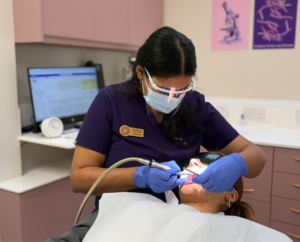
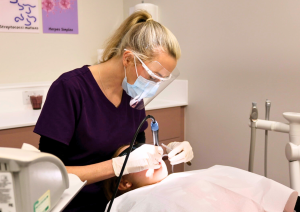
At Optimal Dental Health, our Biological Hygiene Appointments go far beyond a traditional scale and polish.
Our focus is on understanding why inflammation develops and helping patients achieve long-term oral health rather than simply cleaning teeth.
During your appointment, we include:
- Live plaque sampling so you can see your oral bacteria under the microscope
- Phase contrast microscopy to assess bacterial activity
- Advanced Airflow technology for gentle biofilm removal
- Ozone therapy to help reduce harmful bacteria
- Personalised oral hygiene coaching
- Bespoke home-care recommendations
- Assessment of your gum health and oral microbiome
- Referral for advanced periodontal therapy if required
By combining professional care with excellent home cleaning, including water flossing where appropriate, we can help create a healthier oral environment.
Tips for Getting the Most from Your Water Flosser
If you’re new to water flossing, start on the lowest pressure setting.
- Lean over the sink before switching it on.
- Trace the gumline slowly rather than rushing.
- Pause briefly between each tooth.
- Use it once daily, ideally before brushing.
- Clean the device regularly to prevent bacterial build-up.
It usually takes less than two minutes and soon becomes part of your daily routine.
Our Verdict: Is Water Flossing Worth It?
Absolutely. Water flossers are supported by a growing body of clinical evidence and can make a real difference to gum health when used consistently.
While they don’t completely replace traditional floss in every situation, they are one of the most effective tools available for improving daily plaque control, especially for patients with gum disease, implants, orthodontic appliances or reduced dexterity.
At Optimal Dental Health, we see the best results when patients combine:
- Daily brushing
- Water flossing
- Interdental cleaning where appropriate
- A healthy lifestyle that supports the oral microbiome
- Optimal nutrition and hydration
- Regular Biological Hygiene Appointments
Together, these simple habits help protect not only your smile but your overall wellbeing.
About the Author: Dr James Goolnik BDS

Founder & Biological Dentist London | Optimal Dental Health, London
Dr James Goolnik is one of the UK’s leading biological dentists and the Clinical Director of Optimal Dental Health in Baker Street, London.
With over 30 years of experience, he has a special interest in biological dentistry, oral microbiome health, ceramic implants, SMART amalgam removal, gum health, airway dentistry and the connection between oral health and systemic wellbeing.
Dr Goolnik lectures internationally, has trained dentists around the world, and is passionate about helping patients understand how a healthy mouth contributes to a healthier body.
At Optimal Dental Health, his philosophy centres on minimally invasive, evidence-based dentistry that supports long-term health rather than simply treating disease.
Frequently Asked Questions
Is a water flosser better than string floss?
Not necessarily. Each has different strengths, and many people benefit from using both.
Can a water flosser help bleeding gums?
Yes. Studies have shown that regular water flossing can significantly reduce gum bleeding and inflammation over time. You can find out more by booking a biological dental clean with one of our London dental hygienists for personalised at-home care.
Can I use mouthwash in my water flosser?
We recommend avoiding mouthwash completely.Many mouthwashes, especially alcohol-based or strong antiseptic rinses, can disrupt the oral microbiome by reducing both beneficial and harmful bacteria. If you would like an extra rinse, we recommend using warm salt water for a few seconds.
How often should I use a water flosser?
Once a day is usually recommended as part of your daily oral hygiene routine.
Do dentists recommend water flossers?
Many dentists and hygienists recommend water flossers, especially for patients with bleeding gums, implants, bridges, braces, crowded teeth or difficulty using string floss.
Can water flossing help gum disease?
Water flossing can help reduce bleeding and inflammation, but it does not cure gum disease on its own. Patients with gum disease still need professional periodontal assessment and hygiene care.
Is water flossing good for dental implants?
Yes. Water flossers can be helpful around dental implants because they flush debris and bacteria from areas that are difficult to clean with a toothbrush alone.
Is a water flosser suitable for children?
Older children who can use the device safely under supervision may benefit, particularly if they wear braces.
Book Your Biological Hygiene Appointment in London
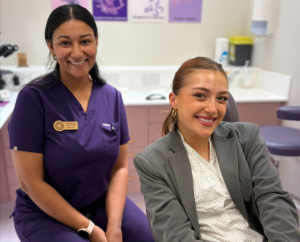
Want to know if you’re cleaning your teeth as effectively as you could be? Our Biological Hygiene Appointment is designed to give you a deeper understanding of your oral health, not just remove plaque.
Using advanced technology including live plaque analysis, phase contrast microscopy, Airflow and ozone therapy, we’ll help you understand your unique oral microbiome and create a personalised home-care plan that works for you.
Whether you’re looking to improve gum health, care for dental implants, prevent gum disease or simply take a more proactive approach to your overall wellbeing, we’re here to help.
Book your Biological Hygiene Appointment today:
📞 0203 921 1000
📧 hello@optimaldental.co.uk
Join 3,500+ Readers Exploring Oral Health & Whole-Body Wellness