What Do Dental X-Rays Actually Reveal?
If you’ve ever been told you need a dental X-ray, you may have wondered: “Why can’t my dentist just look at my teeth?”
The truth is that around 50-70% of every tooth sits beneath the gum line, making much of your oral health completely invisible during a routine examination.
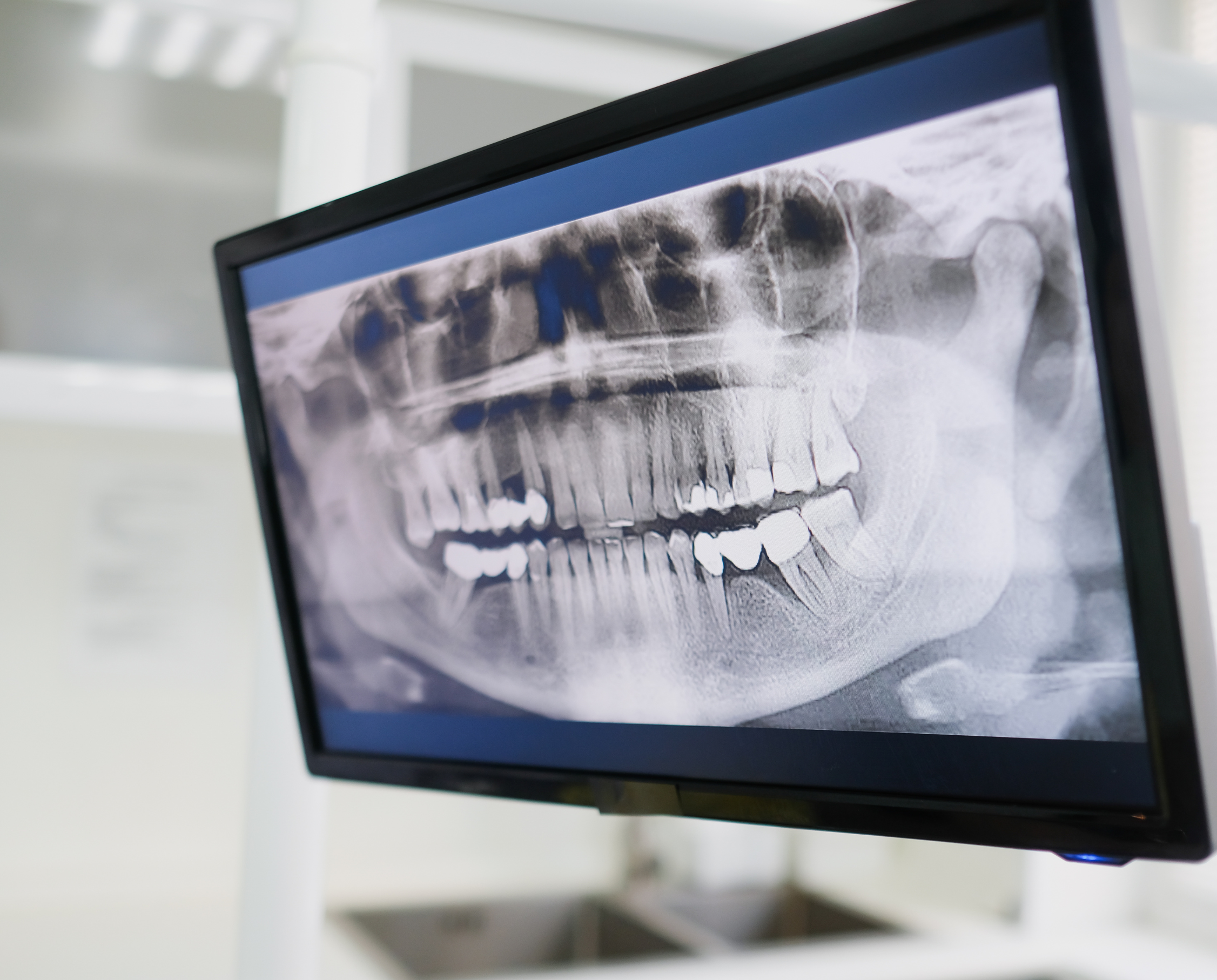
Dental X-rays allow our holistic dental team in London to see beneath the surface, identifying problems months, or even years, before they become painful or expensive to treat. [1]
At Optimal Dental Health in Baker Street, London, we use low-dose digital dental X-rays and advanced 3D CBCT scanning only when clinically necessary, helping us diagnose disease earlier while keeping radiation exposure as low as reasonably achievable (the ALARP principle).
Rather than simply looking for cavities, dental imaging allows us to assess your teeth, bone, jaw joints, sinuses, airway and surrounding structures, giving a much more complete picture of your oral and overall health.
Why Are Dental X-Rays So Important?
Many dental conditions develop silently. You may have:
- Tooth decay
- Bone loss
- Hidden infections
- Cracked teeth
- Cysts
- Impacted wisdom teeth
without experiencing any symptoms. By the time pain develops, significant damage has often already occurred. Digital dental X-rays help detect these issues early, allowing for more conservative treatment and often avoiding more complex procedures later.
Preventative dentistry relies heavily on identifying disease before it becomes obvious, and dental imaging plays a central role in that process.
What Can Dental X-Rays Actually Reveal?
1. Hidden Tooth Decay
One of the most common reasons for dental X-rays is detecting decay between teeth.
These areas cannot usually be seen during a visual examination because adjacent teeth block direct visibility.
Early decay may be treated with remineralisation, improved oral hygiene, dietary advice and minimally invasive restorations, rather than waiting until a filling becomes much larger.
2. Infections Around the Tooth Root
An infected tooth may develop an abscess at the root tip. Sometimes these infections produce no pain, swelling or obvious symptoms, yet continue to destroy the surrounding bone.
X-rays can reveal these hidden infections long before they become emergencies.
3. Bone Loss from Gum Disease
Gum disease affects the supporting bone around your teeth. Unfortunately, this bone loss cannot be measured simply by looking at your gums. Dental radiographs allow us to assess:
- bone height
- severity of periodontal disease
- progression over time
- response to treatment
At Optimal Dental Health, this information is combined with live plaque analysis, oral microbiome assessment and biological hygiene therapy to build a personalised periodontal treatment plan.
4. Cracks and Fractures
Some tooth fractures are impossible to detect clinically. Imaging can help identify cracked roots, vertical fractures, trauma injuries and damaged restorations, which may explain ongoing discomfort or sensitivity.
5. Wisdom Teeth Position
Many wisdom teeth remain trapped beneath the gums. An X-ray allows your dentist to assess:
- angle of eruption
- available space
- proximity to nerves
- relationship to neighbouring teeth
This helps determine whether monitoring or extraction is the most appropriate option.
Assessing Your Jaw Bone Health for Complex Treatment
Dental imaging provides valuable information about the health of your jawbone. This becomes particularly important before:
- dental implants
- orthodontic treatment
- extractions
- bone grafting
Knowing the quality and quantity of available bone allows treatment to be planned much more accurately.
7. Cysts and Other Hidden Conditions
Although uncommon, X-rays can occasionally reveal:
- jaw cysts
- benign tumours
- developmental abnormalities
- impacted teeth
- retained roots
Many of these are discovered completely by chance before they cause symptoms. Early diagnosis almost always leads to better outcomes.
What Is a CBCT Scan?
Some situations require more information than a standard dental X-ray can provide.
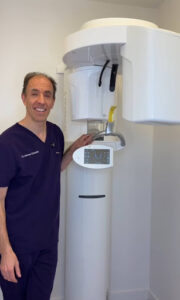
A Cone Beam CT (CBCT) scan creates a highly detailed three-dimensional image of your teeth, jaw and surrounding structures. [3]
Rather than viewing a flat image, your dentist can examine the anatomy from every angle.
CBCT scans are invaluable for:
- dental implant planning
- root canal assessment
- impacted wisdom teeth
- jaw joint (TMJ) problems
- airway evaluation
- sinus assessment
- facial pain investigation
- complex extractions
Because the scan is three-dimensional, it often reveals details that conventional X-rays simply cannot show.
Please note: All imaging, including intra-oral X-rays, 2D OPG scans and 3D CBCT scans, is only taken when clinically appropriate. Before any imaging is carried out, you must first have a Dental Health Check or consultation with an Optimal Dental Health dentist. Your dentist will assess you, make a provisional diagnosis where appropriate, and confirm whether any X-rays or scans are required.
Do Dental X-Rays Show More Than Teeth?
Absolutely. Modern dental imaging can reveal structures including jawbone, facial bones, maxillary sinuses, developing teeth, nerve pathways, surrounding bone quality and temporomandibular joints (TMJ). This broader view often helps explain symptoms that might otherwise remain unexplained.
Are Dental X-Rays Safe?
This is one of the most common questions patients ask. Yes, when they are clinically justified and taken using modern low-dose digital equipment.
At Optimal Dental Health, we follow strict national guidelines and only prescribe imaging when it will directly influence diagnosis or treatment planning.
Our clinicians follow the ALARP principle (As Low As Reasonably Practicable) to minimise radiation exposure while ensuring accurate diagnosis. [2]
How Much Radiation Is in a Dental X-Ray?
Many patients are surprised to learn just how low modern dental X-ray doses actually are.
Typical approximate doses are:
| Imaging Type | Approximate Radiation Dose |
| Bitewing X-ray | 5 microsieverts |
| Periapical X-ray | 5 microsieverts |
| Panoramic X-ray | 14–24 microsieverts |
| Small Field CBCT | Varies depending on field of view and scan settings |
For comparison:
- Natural background radiation in the UK exposes us to around 6 to 7 microsieverts every day.
- A return transatlantic flight exposes passengers to considerably more radiation than many dental X-rays due to cosmic radiation at high altitude. Flight to Hong Kong is around 50 microsieverts
- Modern digital dentistry has dramatically reduced radiation exposure while significantly improving image quality.
Read our guide: CBCT Scans for Root Canal Therapy
Why Doesn’t Every Patient Need a CBCT Scan?
A CBCT scan provides far more information than a routine dental X-ray, but it isn’t necessary for every patient. We only recommend CBCT imaging when the additional diagnostic information will genuinely improve treatment planning or patient safety.
Examples include:
- dental implant planning
- complex root canal treatment
- impacted teeth
- facial pain
- suspected fractures
- airway assessment
Using the right imaging for the right patient is an important part of evidence-based dentistry.
An OPG, or panoramic X-ray, is a wide-view 2D image showing the teeth, jaws, jaw joints and surrounding structures. It has less radiation and is more cost effective than a CBCT full mouth scan.
How Often Should You Have Dental X-Rays?
There is no single timetable. The frequency depends on factors including your age, decay risk, gum health, previous dental history, symptoms and ongoing treatment.
Some patients may only require X-rays every few years. Others with active dental disease may benefit from more regular monitoring. Our dentists will always explain why an X-ray is recommended for you, before taking it.
Dental X-Rays and Preventative Dentistry
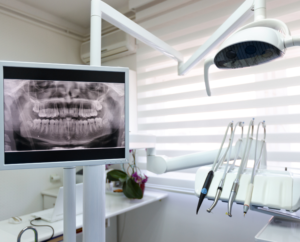
One of the biggest advantages of dental imaging is that it allows problems to be treated early. Early diagnosis often means:
- smaller fillings
- avoiding root canal treatment
- preventing tooth loss
- protecting surrounding bone
- reducing long-term treatment costs
This aligns closely with our philosophy at Optimal Dental Health, where prevention is always preferable to intervention whenever possible.
Why Choose Optimal Dental Health for Dental Imaging in London?
As a holistic dental practice in Baker Street, London, we use advanced diagnostic technology to help provide accurate diagnoses while supporting minimally invasive treatment.
Our digital imaging includes:
- Low-dose digital dental X-rays
- Advanced CBCT scanning when clinically indicated
- Intraoral photography
- Digital scanning
- Comprehensive periodontal assessment
- Oral microbiome testing
- Phase contrast microscopy
Rather than treating isolated teeth, we look at how your oral health connects with your wider wellbeing and whole-body health.
Ready to See What’s Happening Beneath the Surface?
At Optimal Dental Health in Baker Street, London, our comprehensive 15-Point Dental Health Check combines a thorough clinical examination with advanced diagnostic technology, including low-dose digital dental X-rays where clinically indicated, to build a complete picture of your oral health.
We assess far more than just your teeth, evaluating your gums, bite, jaw joints, oral cancer risk, existing restorations and the factors that may be affecting your long-term health. If further investigation is needed, we can also recommend advanced imaging such as a CBCT scan to ensure the most accurate diagnosis and personalised treatment plan.
Book your 15-Point Dental Health Check today and take a proactive approach to protecting your smile and overall wellbeing. You can book online, call us on 020 3921 1000, or email hello@optimaldental.co.uk to arrange your appointment with one of our experienced holistic dentists in London.
Frequently Asked Questions
Can cavities be missed without X-rays?
Yes. Many cavities develop between teeth where they cannot be seen during a visual examination. X-rays are often the only reliable way to detect them early.
Can dental X-rays detect gum disease?
Yes. They show the level of supporting bone around your teeth, allowing dentists to assess the severity of periodontal disease.
Are digital dental X-rays safer?
Digital systems use significantly lower radiation doses than traditional film X-rays while producing clearer images.
Can dental X-rays show infections?
Yes. Hidden abscesses and infections around tooth roots are often only visible on dental radiographs.
Can I have dental X-rays if I am pregnant?
Dental X-rays are only taken during pregnancy when clinically necessary. If you are pregnant or think you may be, please tell your dentist before any imaging. We will always assess the risks and benefits and only recommend imaging if it is needed for your care.
Does every patient need a CBCT scan?
No. CBCT scans are reserved for situations where three-dimensional imaging will improve diagnosis or treatment planning.
Can dental X-rays detect oral cancer?
Dental X-rays are not designed to diagnose oral cancer, but they may occasionally reveal changes in the jawbone or surrounding structures that require further investigation. Oral cancer screening is performed through a comprehensive clinical examination of the mouth, tongue, cheeks, lips and throat.
Please note: All imaging, including intra-oral X-rays, 2D OPG scans and 3D CBCT scans, is only taken when clinically appropriate. Before any imaging is carried out, you must first have a Dental Health Check or consultation with an Optimal Dental Health dentist. Your dentist will assess you, make a provisional diagnosis where appropriate, and confirm whether any X-rays or scans are required.
About the Author: Dr James Goolnik BDS

Founder & Biological Dentist | Optimal Dental Health | Baker Street, London
Dr James Goolnik is one of the UK’s leading advocates of holistic and preventative dentistry. As Clinical Director of Optimal Dental Health in London, he has a particular interest in biological dentistry, the oral microbiome, minimally invasive treatment, sleep dentistry and the relationship between oral health and whole-body wellbeing.
He lectures internationally on preventative oral healthcare and is passionate about helping patients understand the importance of early diagnosis through modern dental technology.
His philosophy is simple: identify problems early, preserve natural teeth whenever possible, and provide evidence-based care using the least invasive approach.
Join over 3,500+ subscribers